Health and Care (Staffing) (Scotland) Act 2019 Annual report 2025/26
Guidance on using this template
Purpose
This guidance has been developed to support relevant organisations in the completion of the below template which will form their annual report detailing compliance with the requirements of the Health and Care (Staffing) (Scotland) Act 2019 (the Act). Completed reports must be returned to hcsa@gov.scot by 30 April 2026.
Additional resources can be accessed here: Health and Care (Staffing) (Scotland) Act 2019: statutory guidance - gov.scot
If you require further assistance or have any queries, please contact hcsa@gov.scot.
Summary Section
- The summary asks for an overview of how the relevant organisation has carried out all of the duties and requirements of the Act. This should include all NHS functions provided by all professional disciplines covered under the Act. You will be asked to provide an assurance level in respect of your overall compliance with the Act. Definitions for these assurance levels can be found at point seven.
- Following receipt, the Scottish Ministers must collate reports from relevant organisations and lay a combined report before Parliament, along with an accompanying statement setting out how the information will be taken into account in policies for staffing of the health service. To enable this process, the information provided by relevant organisations should be comprehensive and pertinent to the staffing of the health service. To enable this, please complete the questions contained in the reporting template in sufficient detail, setting out the key achievements, outcomes, learning and risks and how this information has been used to inform workforce planning at the local level.
Individual duties / requirements
- Following the summary section, the template seeks detail on individual duties/requirements of the Act in turn, asking relevant organisations to provide an assessment of compliance, and to provide details. Again, this should include all NHS functions, provided by all professional disciplines covered under the Act. Relevant organisations should provide detail to explain the assurance level in respect of the Duty, detailing evidence of compliance where appropriate, or gaps and areas of ongoing focus.
Evidence could, for example, include details of the organisational structures, systems and/or processes being used. - The duty description contains the legislative wording of the Act, outlining the duty requirements.
- As outlined at paragraph 3, the template requests an overall level of assurance with regard to the relevant organisation's compliance with the Act/Duties, using the assurance categories as detailed below:
| Level of assurance | System adequacy | Controls |
|---|---|---|
| Substantial assurance | A sound system of governance, risk management and control exists, with internal controls operating effectively and being consistently applied to support the achievement of objectives in the area audited. | Controls are applied continuously or with only minor lapses. |
| Reasonable assurance | There is a generally sound system of governance, risk management, and control in place. Some issues, non-compliance or scope for improvement were identified which may put at risk the achievement of objectives in the area audited. Controls are applied frequently but with evidence of non- compliance. | Controls are applied frequently but with evidence of non- compliance. |
| Limited assurance | Significant gaps, weaknesses, or non- compliance were identified. Improvement is required to the system of governance, risk management, and control to effectively manage risks to the achievement of objectives in the area audited. | Controls are applied but with some significant lapses. |
| No assurance | Immediate action is required to address fundamental gaps, weaknesses or non-compliance identified. The system of governance, risk management and control is inadequate to effectively manage risks to the achievement of objectives in the area audited. | Significant breakdown in the application of controls. |
- The relevant organisation is asked to provide details of areas of success, achievement and learning associated with the particular duty or requirement, along with indicating how this could be used in the future. Again, in order to provide meaningful information that can inform healthcare staffing policy, relevant organisations are asked to complete this with an appropriate level of detail.
- The relevant organisation is then asked to provide details of any areas of risk where they have been unable to achieve or maintain compliance with the particular duty or requirement, or where they have faced any challenges or risks in carrying out their duties or requirements. In this section, relevant organisations are also asked what actions have been or are being taken to address this. Again, in order to provide meaningful information that can inform healthcare staffing policy, relevant organisations are asked to provide an appropriate level of detail.
Summary
Please answer the following questions, to provide an overall assessment of how the organisation has carried out its duties under sections 12IA, 12IC, 12ID, 12IE, 12IF, 12IH, 12II, 12IJ and 12IL of the National Health Service (Scotland) Act 1978 (inserted by section 4 of the Act), and in line with Sections 1 and 2 of the Act : Guiding principles for health and care staffing and Guiding principles etc. in health and care staffing and planning.
Please advise how the information provided in this report has been used or will be used to inform workforce plans.
In fulfilling the requirements of the Act, the processes underpinning this Annual Report, together with the quarterly reporting cycle, provide SAS with a structured and systematic approach to the collection, analysis, and synthesis of relevant quantitative and qualitative data. The framework enables the organisation to evaluate progress, identify areas of strong performance, and highlight where further improvement is required, thus building systems and assurances demonstrating compliance with the Act. Contextually, and as was reported last year, there remain no specific staffing tools provided under the Act applicable to the Scottish Ambulance Service. However, the service continues to capitalise on its unique data rich environment drawing on significant data intelligence that continue to underpin our approach to workforce planning informed by clinical outcomes, care quality measures1 and real-time staffing. We continue to benchmark our services against the requirements of the Act, and importantly, our understanding of staffing and care provision (along with how we measure them) continues to develop and improve as we strive to deliver high quality, safe, and effective patient‑centred care.
As we transitioned into this second year of formal reporting, information continued to be collated centrally from all service areas. This centralised model has strengthened the consistency, reliability, and comparability of data across the organisation. The process also supports ongoing dialogue between the newly appointed Lead Practitioner for Safe Staffing and Excellence in Care (seconded) and the respective reporting leads from within each area. These iterative processes and discussions continue to work towards the development of a shared understanding of expectations, reinforce alignment with statutory duties, and promote accuracy and uniformity in how information is interpreted and reported. The approach also creates opportunities for ongoing exploration, including the identification of emerging trends and the refinement of reporting variables, ensuring a contemporary, valid and accurate reflection of ambulance service staffing and care. Together, these arrangements work together to provide assurance that the organisation is operating in line with both the spirit and the requirements of the Act, while supporting a continuous improvement culture in monitoring, governance, safety and overall service quality.
We continue to use the Act as a framework for learning, development, and continuous improvement across our services. Over the past year, our understanding has strengthened in many key areas. However, future work is planned to deepen understanding and provide insight into aspects of scheduled care, education, the Integrated Clinical Hub and advanced practitioners, and a need to further enhance staff awareness and engagement with the Act particularly around reporting. These aspects will form a significant focus during 2026/27, ensuring that our systems continue to evolve at pace with our clinical evolution and in ways that strengthen oversight, improve consistency, and support the delivery of safe, effective and high-quality care.
Please provide information on how your compliance to the Health and Care Staffing Act has led to improved outcomes for service users and workforce
Across the service, each ‘function’ contributes to the patient journey, from the initial 999, through clinical triage in our Ambulance Control Centres and Integrated Clinical Hubs, to the deployment of frontline ambulance clinicians, specialist teams, and onward referral or conveyance. These interconnected services collectively face the challenge of accurately determining clinical acuity, ensuring timely responses for high priority patients, and directing lower acuity individuals toward the most appropriate pathways. The Act reinforces the importance of refining and strengthening the measures that support this system-wide activity, ensuring they are robust, valid, and triangulated to provide a clear and consistent picture of safe staffing and care quality across all areas of the service.
Over the past 12 months, evidence drawn from our published performance, patient experience, and quality reporting illustrates how adherence to the Act contributes to organisational and strategic awareness, operational intelligence, identification and improvement opportunities at system, workforce and patient levels. Routine monitoring of staffing levels, patient safety and clinical quality indicators continue to support early identification of variation in performance, enabling real-time action and, where necessary, targeted improvement work. Live monitoring on staffing levels at both local (station) level and regional level provides continuous visibility against agreed staffing levels, supporting timely escalation and proportionate mitigation where feasible. Despite these measures, it is not always possible to fully mitigate the impact of staff shortages, particularly during periods of sustained pressure (such as hospital turnaround) or unforeseen absences where the service prioritised risk-based decision making to maintain safe and effective care.
System pressures: particularly prolonged hospital turnaround times, continue to affect patient flow and are expected to persist. SAS teams are working closely with territorial Health Boards to understand root causes and implement targeted mitigations. Quarterly reporting demonstrates a range of initiatives designed to reduce hospital waits and avoid unnecessary admissions. In the West Region, for example, a flow improvement approach enables patients to remain safely at home until receiving unit capacity is confirmed, supported by safety netting from Clinical Hub clinicians. In the North Region, daily tactical huddles allow for proactive, collaborative management of turnaround delays, and in the East, the continuous development of the award-winning Consultant Connect shared decision-making model continues to support appropriate patient care referrals and conveyance. Alongside these local initiatives, non-conveyance care pathways continue to develop nationally, linking SAS with health, social care, and third sector partners. While these pathways can extend the time an ambulance is on scene, this approach is patient centred, reduces emergency department demand and can free up ambulance resources more effectively.
Voices of Patients and Staff: Early testing of patient feedback mechanisms by pathway leads, such as feedback from individuals (n=443) following a fall, will help to refine emerging care pathways, while feedback from clinician insights continue to strengthen service learning. In Glasgow, this led to improvements in referral processes by establishing a single point of contact rather than multiple routes. More broadly, patient experience feedback gathered through national surveys, Care Opinion, compliments, and complaints highlights areas of strong practice and identifies opportunities to improve communication, response times, and person-centred care. Staff experience data, including absence trends, wellbeing engagement activity, and information from annual iMatter reporting, further informs our approach to sustaining safe staffing and care quality. In parallel, adverse event reporting and clinical audit findings have led to more consistent reporting, clearer operational guidance, and strengthened escalation processes, enabling earlier identification of staffing related risks.
Ambulance clinicians, as well as colleagues in ACCs and Clinical Hubs, continue to work under significant pressure. In recognition of this, the Service has expanded wellbeing support through dedicated Wellbeing Leads with mental health expertise, alongside targeted improvements informed by recent iMatter results. Quality improvement work has delivered tangible clinical gains, for example, reduced on scene times for hyperacute stroke patients, improving time to definitive care, and continued development of out‑-of‑hospital cardiac arrest pathways. Our Return-to-Work ‑ module, developed by our Clinical Training Officers within the Education and Professional Development Department, helps Ambulance Clinicians regain confidence and competence after a prolonged period of absence. The programme is continuing to evolve, and early indications suggest it is having a positive impact, with encouraging feedback from participants to date.
Together, these insights demonstrate how the Act supports continuous improvement across the patient journey. In the coming year, we will continue to embed more robust staffing measures, enhance the visibility of risks, and strengthen the alignment between staffing decisions, patient outcomes, and staff experience, ensuring compliance with the Act and continued delivery of safe, effective, person-centred care.
Health and Care Staffing Act Health Board Duty Compliance Assurance Levels
Please complete the table below with your Health Boards compliance assurance level for each duty.
Duty 12IA: Duty To Ensure Appropriate Staffing
| Duty | Compliance Assurance Level |
|---|---|
| Duty 12IA: Duty To Ensure Appropriate Staffing | Reasonable Assurance |
| Duty 12IC: Duty To Have Real-Time Staffing Assessment In Place. |
Reasonable Assurance |
| Duty 12ID: Duty To Have Risk Escalation Process In Place. | Reasonable Assurance |
| Duty 12IE: Duty To Have Arrangements To Address Severe And Recurrent Risks. |
Substantial Assurance |
| Duty 12IF: Duty To Seek Clinical Advice On Staffing. |
Reasonable Assurance |
| Duty 12II: Duty To Ensure Appropriate Staffing: Training Of Staff | Reasonable Assurance |
| Duty 12IH: Duty To Ensure Adequate Time Given To Clinical Leaders | Reasonable Assurance |
| Duty 12IJ: Duty To Follow The Common Staffing Method (CSM) |
Reasonable Assurance |
| Duty 12IL: Training And Consultation Of Staff |
Reasonable Assurance |
| Planning And Securing Services |
Substantial Assurance |
Please indicate the overall level of assurance of the organisation's compliance
Reasonable Assurance
Duty 12IA: Duty to ensure appropriate staffing
Duty Description
2 Guiding principles etc. in health care staffing and planning
(1) In carrying out the duty relating to staffing imposed by section 12IA of the National Health Service (Scotland) Act 1978, every Health Board and the Common Services Agency for the Scottish Health Service must have regard to the guiding principles for health and care staffing.
Duty 12IA: Duty to ensure appropriate staffing.
(1) It is the duty of every Health Board and the Agency to ensure that at all times suitably qualified and competent individuals, from such a range of professional disciplines as necessary, are working in such numbers as are appropriate for—
(a) the health, wellbeing, and safety of patients,
(b) the provision of safe and high-quality health care, and
(c) in so far as it affects either of those matters, the wellbeing of staff.
(2) In determining what, in a particular kind of health care provision, constitutes appropriate numbers for the purposes of subsection (1), regard is to be had to—
(a) the nature of the particular kind of health care provision,
(b) the local context in which it is being provided,
(c) the number of patients being provided it,
(d) the needs of patients being provided it, and
(e) appropriate clinical advice.
Please provide information on the steps taken to comply with Duty 12IA.
Duty 12IA (1): Duty to ensure appropriate Staffing - overview
Alignment of existing systems and processes with the Act’s requirements was completed in Year 1, and these arrangements have continued to embed into routine practice. Oversight remains in place through a quarterly reporting to both the Care Quality and Professional Development Directorate and the Workforce and Wellbeing Portfolio Board. Approaches to compliance vary across the job roles named in the guidance due to differences in location, security requirements, and role characteristics. Quarterly reports highlight that across the service, regions continue to strengthen real time operational oversight through increased management visibility at stations, hospitals, and acute sites, ensuring timely staffing decisions and proportionate escalation during periods of flow delay. Operational resilience is further supported by enhanced roles such as HALOs, evidence based intraday reporting within ACCs, and careful rostering in specialist areas like Advanced Practice and the Integrated Clinical Hub. While staffing models vary by function, all areas remain focused on maximising safe cover, improving responsiveness, and aligning workforce planning with service demand and the National Escalation Plan.
Service wide promotion of the legislation continues and engagement across areas permitting cross comparison generates valuable reflection and learning across SAS (and with other Health Boards/partners). To further strengthen enhance and build organisational awareness of the Health and Care Staffing (Scotland Act) resources have been embedded on the services internal web pages permitting full access for all staff. Staff report adverse events relating to safe staffing via our Risk Management system InPhase (Ideagen) where Managers will review events in their area for learning and mitigation. The implementation of this modern cloud-based system in March 2025 has resulted in staff being able to report events on their work mobile phone without needing access to a workplace computer. All events reported are considered for review as a significant adverse event by the patient safety team and if the event is confirmed as a SAER or a level 2 review this would result in a detailed analysis being carried out on the circumstances involved. While further progress toward a unified approach to reporting is expected, some variation will remain given the complexity of workforce systems. Annual updates delivered through Statutory and Mandatory Training (TURAS)2 have expanded staff access to adapted educational materials tailored for the Scottish Ambulance Service. These resources form a core element of the 2025/26 training programme and support a front-line facing approach that empowers staff and drives continued organisational improvement.
Wider NHS system pressures, particularly extended hospital turnaround times, continue to heavily influence the SAS’s ability to always provide an appropriate response. These delays create constraints that persist irrespective of overall staffing levels. Nonetheless, established systems with partner Health Boards support the rapid identification of emerging risks and enable proportionate mitigation through real‑time oversight and the effective deployment of existing resources.
Duty 12IA: Duty to ensure appropriate staffing.
(1) It is the duty of every Health Board and the Agency to ensure that at all times suitably qualified and competent individuals, from such a range of professional disciplines as necessary, are working in such numbers as are appropriate for:
12IA(1)(a) the health, wellbeing, and safety of patients: Evidence from across areas demonstrates the Scottish Ambulance Service continues to strengthen the systems, processes and understanding required to provide assurance under this aspect of the Act. This work operates across multiple organisational levels, from frontline practice to strategic governance/planning, and reflects the increasing sophistication with which the Service delivers patient care. All service areas, including the East, North and West Regions, Ambulance Control Centres, the Integrated Clinical Hub, Education and Professional Development, ScotSTAR, Scheduled Care, and Advanced Practice, provide quarterly reports against the requirements of the Act. These submissions offer proportionate assurance based on the specific functions and context of each service component. While all areas maintain awareness of local staffing levels, daily operational intelligence is consolidated through Service wide ‘Splash’ reports. These provide visibility of factors such as forecast versus actual demand, operational cover, hospital turnaround times, and specialist resource availability within the Integrated Clinical Hub. Collectively, this promotes a shared organisational understanding of activity, risk, and capacity. Established escalation plans, activated in response to seasonal pressures, major events, adverse weather, or wider system constraints, further support the Service’s ability to respond dynamically and maintain safe and effective operations. The ‘common staffing method’ is not used by SAS but we continue to apply the principles and ethics within our workforce planning to address issues in real-time, medium and long-term.
12IA(1)(b) the provision of safe and high-quality health care: Understanding local context is essential for a national organisation with the geographical diversity of the Scottish Ambulance Service. Operating across island, rural, remote, and urban locations, SAS adapts service delivery to meet the needs of each community. This provides some significant and unique challenges but is supported through local knowledge that informs both day-to-day operations and longer-term service planning, supported through strong local leadership and close collaboration with staff and service users. Many challenges are inherently geographically based, and insights from these directly inform workforce planning and delivery models. SAS continues to collaborate closely with the National Centre for Remote and Rural Healthcare, particularly on advanced practice, and targeted recruitment, alongside its territorial Boards and other local partners to develop integrated approaches to care that reflect the environments in which they operate. However, recruitment in remote and rural areas remains challenging due to this geographical spread, smaller applicant pools, and longer training pipelines, all of which impact roster resilience and the ability to provide sickness absence cover. Prohibitive costs of property and availability of rental also impact on the ability to resource this area however some innovative approaches with local councils have supported the provision of accommodation for staff in some of these areas. Beyond these significant efforts, mitigations such as, for example, drawing on clinicians from areas such as
the Education and Professional Development Department, do provide immediate coverage but such strategies subsequently impact on other areas of service delivery. Reporting mechanisms associated with the Act continue to maintain a key organisational focus on these workforce pressures.
12IA(1)(c) in so far as it affects either of those matters, the wellbeing of staff: Across all regions, staff wellbeing is actively supported through enhanced leadership visibility, proactive welfare measures, and accessible supervision structures that provide safe spaces for reflection and support. Wellbeing provision is further strengthened through regional wellbeing groups, targeted welfare arrangements during periods of operational pressure, dedicated contact and absence support processes, and ongoing initiatives that ensure staff receive timely, appropriate, and compassionate support. Staff wellbeing is monitored and supported through a combination of structured reporting tools and ongoing engagement, including iMatter (click here), wellbeing conversations, return to work discussions, and routine 1:1 interaction that offer meaningful insight into staff experience. This is supplemented by quantitative data from GRS records, sickness absence monitoring (April 2025 – March 2026 = 9.4% [down 0.1% on 2024/25), pulse surveys, TRiM (Trauma Risk Management) referrals (n=216 Jan-Dec 2025), and real-time feedback mechanisms, together providing an integrated picture of wellbeing pressures, early warning indicators, and opportunities for targeted support and improvement.3 Data from staff reporting InPhase is presented below. There were N=8487 adverse events reported during 2025/26. Of these, Table 1 below summarises the n=200 (2.4%) reported adverse incidents (April 2025 - March 2026) pertaining to ‘excessive workload causing fatigue’, ‘delayed responses – no available resources’, ‘insufficient staff available to respond effectively’, and instances where ‘patient safety impact due to fatigue’.
Both fatigue and delayed response show an increase in reporting in January likely due to the significant organisational pressures faced. These tend to rise during winter pressures and hence measures are put in place such as increased wellbeing support for staff and additional clinicians in the ICH to ensure appropriate safety netting.
Table 1: Staff InPhase reporting: Key areas 'A'
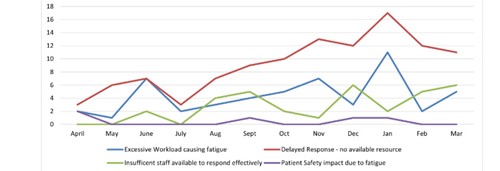
Similarly, Table 2 (below) summarises n=230 (2.7%) adverse events reported via InPhase related to meal breaks (April 2025 to March 2026). The trend shows significant viability in reporting of the 5 meal break measures.
Table 2: Staff InPhase reporting: Key areas 'B'
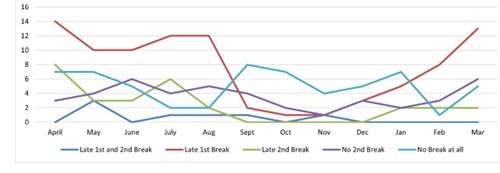
As noted above routine surveillance of calls provides real-time information on staff coverage enabling active response from local management teams.
(2) In determining what, in a particular kind of health care provision, constitutes appropriate numbers for the purposes of subsection (1), regard is to be had to—
12IA(a) the nature of the particular kind of health care provision: SAS’s organisational structure and reporting arrangements reflect the nature of the healthcare it provides, with the three regions, ScotSTAR, Advanced Practice, Ambulance Control Centres, Education and Professional Development Department, Scheduled Care, and the Integrated Clinical Hub all submitting quarterly updates on their performance against relevant duties. Our Special Operation Response Teams, who provide care in high-risk, hazardous environments or mass-casualty incidents, will also be included in quarterly reports moving forward from Q1 2026/27. InPhase is now embedded as the organisation’s risk monitoring system, ensuring staffing risks are recorded, reviewed and acted upon. Partnership working adds valuable representation, local insight and strengthens triangulation. SAS’s data systems use historical activity and projected health care needs to predict demand and required capacity, recognising that variation arises from seasonal factors, events, weather and wider system pressures such as hospital flow. Regional and national escalation plans support responses to fluctuating demand. Although the Common Staffing Method is not used due to the absence of an ambulance specific tool from HIS, its principles inform workforce planning, which addresses issues in real time and over the medium and longer term. Our active Research and Innovation Team also seek to ensure research focused on priority areas supplementing a contemporary understanding of the demographics of the population served, efficacy of existing and new interventions and supports the organisation as it strives to deliver scientifically grounded, evidence-informed care.
12IA(b) the local context in which it is being provided: Appreciating the influence of local context is essential for a national organisation such as SAS. With operating bases across island, rural, remote and urban settings, service delivery is shaped to reflect the distinct health needs and logistical considerations of each area. Local leadership structures and collaboration with staff and service users inform both current practice and future service planning, ensuring responsiveness to geographically specific challenges. These local insights feed directly into organisational workforce planning and delivery models. SAS also works closely with the National Centre for Remote and Rural Healthcare, other NHS Boards and local organisations to support and develop integrated approaches to healthcare delivery across Scotland.
12IA(c) the number of patients being provided it: The size and needs of Scotland’s population groups are integral to SAS service planning and delivery. Demand modelling based on historical activity and projected health care needs of the population provides insight into the type, duration and clinical level of care required, while sustained efforts are made to recognise and address healthcare inequalities across different communities. These considerations inform local service review and decisions regarding resource establishment. Collaboration with other healthcare providers supports the development of resilient, robust and context appropriate services. Realtime oversight of operational resources is maintained through data systems monitored by control staff and clinical managers, enabling timely repositioning of assets and adaptation of responses in line with local escalation plans when staffing level concerns arise.
12IA(d) the needs of patients being provided it: The size and needs of population inform service planning and delivery at a strategic level (using the 6-steps approach). Modelling of demand based upon historical and projected population level data continue to be undertaken to provide insight into likely clinical conditions and presentations which shape our understanding and therefore the likely clinical needs of the of the population and subsequently the healthcare likely to be required. Developing our understanding of these existing and projected changing demands inform and therefore shape the organisations clinical response model, strategy and workforce modelling to ensure the right care, for the right patient at the right time and at the right place. SAS continues to recognise and address healthcare inequalities across society. Our response model not only focuses on cover, but also on staff mix ensuring adequate proportions of clinical grades are available to respond to specific patient needs. Ambulance Clinicians are then dispatched by staff within the Ambulance Control Room/Integrated Clinical Hub systems that are designed to ensure, wherever possible, the appropriate level of clinical care is targeted to patients with specific needs. Data is available on this with ongoing work being undertaken to establish its quality/validity and its utility in future measures for reporting.
SAS is committed to recognising and addressing healthcare inequalities across Scotland’s population. Insights into these factors inform local service reviews and resource planning. A Rapid Scoping Review, undertaken with two university partners, is identifying suitable ambulance care measures. Early findings indicate that characteristics such as sex and ethnicity may influence aspects of care delivery and outcomes. Further work is planned to develop appropriate measures to establish baselines and identify improvement priorities. The Scottish Ambulance Service recently added ethnicity fields to the electronic patient report forms which have the potential to strengthen our understanding of these minority populations through audit, research, service evaluation, and quality improvement activity, while also enhancing clinicians’ awareness of the diverse population across Scotland. Alongside the day-to-day running of core service activity both
Duty 12IA (1): Duty to ensure appropriate Staffing - overview
Alignment of existing systems and processes with the Act’s requirements was completed in Year 1, and these arrangements have continued to embed into routine practice. Oversight remains in place through a quarterly reporting to both the Care Quality and Professional Development Directorate and the Workforce and Wellbeing Portfolio Board. Approaches to compliance vary across the job roles named in the guidance due to differences in location, security requirements, and role characteristics. Quarterly reports highlight that across the service, regions continue to strengthen real time operational oversight through increased management visibility at stations, hospitals, and acute sites, ensuring timely staffing decisions and proportionate escalation during periods of flow delay. Operational resilience is further supported by enhanced roles such as HALOs, evidence based intraday reporting within ACCs, and careful rostering in specialist areas like Advanced Practice and the Integrated Clinical Hub. While staffing models vary by function, all areas remain focused on maximising safe cover, improving responsiveness, and aligning workforce planning with service demand and the National Escalation Plan.
Service wide promotion of the legislation continues and engagement across areas permitting cross comparison generates valuable reflection and learning across SAS (and with other Health Boards/partners). To further strengthen enhance and build organisational awareness of the Health and Care Staffing (Scotland Act) resources have been embedded on the services internal web pages permitting full access for all staff. Staff report adverse events relating to safe staffing via our Risk Management system InPhase (Ideagen) where Managers will review events in their area for learning and mitigation. The implementation of this modern cloud-based system in March 2025 has resulted in staff being able to report events on their work mobile phone without needing access to a workplace computer. All events reported are considered for review as a significant adverse event by the patient safety team and if the event is confirmed as a SAER or a level 2 review this would result in a detailed analysis being carried out on the circumstances involved. While further progress toward a unified approach to reporting is expected, some variation will remain given the complexity of workforce systems. Annual updates delivered through Statutory and Mandatory Training (TURAS)2 have expanded staff access to adapted educational materials tailored for the Scottish Ambulance Service. These resources form a core element of the 2025/26 training programme and support a front-line facing approach that empowers staff and drives continued organisational improvement.
Wider NHS system pressures, particularly extended hospital turnaround times, continue to heavily influence the SAS’s ability to always provide an appropriate response. These delays create constraints that persist irrespective of overall staffing levels. Nonetheless, established systems with partner Health Boards support the rapid identification of emerging risks and enable proportionate mitigation through real‑time oversight and the effective deployment of existing resources.
Duty 12IA: Duty to ensure appropriate staffing.
(1) It is the duty of every Health Board and the Agency to ensure that at all times suitably qualified and competent individuals, from such a range of professional disciplines as necessary, are working in such numbers as are appropriate for:
12IA(1)(a) the health, wellbeing, and safety of patients: Evidence from across areas demonstrates the Scottish Ambulance Service continues to strengthen the systems, processes and understanding required to provide assurance under this aspect of the Act. This work operates across multiple organisational levels, from frontline practice to strategic governance/planning, and reflects the increasing sophistication with which the Service delivers patient care. All service areas, including the East, North and West Regions, Ambulance Control Centres, the Integrated Clinical Hub, Education and Professional Development, ScotSTAR, Scheduled Care, and Advanced Practice, provide quarterly reports against the requirements of the Act. These submissions offer proportionate assurance based on the specific functions and context of each service component. While all areas maintain awareness of local staffing levels, daily operational intelligence is consolidated through Service wide ‘Splash’ reports. These provide visibility of factors such as forecast versus actual demand, operational cover, hospital turnaround times, and specialist resource availability within the Integrated Clinical Hub. Collectively, this promotes a shared organisational understanding of activity, risk, and capacity. Established escalation plans, activated in response to seasonal pressures, major events, adverse weather, or wider system constraints, further support the Service’s ability to respond dynamically and maintain safe and effective operations. The ‘common staffing method’ is not used by SAS but we continue to apply the principles and ethics within our workforce planning to address issues in real-time, medium and long-term.
12IA(1)(b) the provision of safe and high-quality health care: Understanding local context is essential for a national organisation with the geographical diversity of the Scottish Ambulance Service. Operating across island, rural, remote, and urban locations, SAS adapts service delivery to meet the needs of each community. This provides some significant and unique challenges but is supported through local knowledge that informs both day-to-day operations and longer-term service planning, supported through strong local leadership and close collaboration with staff and service users. Many challenges are inherently geographically based, and insights from these directly inform workforce planning and delivery models. SAS continues to collaborate closely with the National Centre for Remote and Rural Healthcare, particularly on advanced practice, and targeted recruitment, alongside its territorial Boards and other local partners to develop integrated approaches to care that reflect the environments in which they operate. However, recruitment in remote and rural areas remains challenging due to this geographical spread, smaller applicant pools, and longer training pipelines, all of which impact roster resilience and the ability to provide sickness absence cover. Prohibitive costs of property and availability of rental also impact on the ability to resource this area however some innovative approaches with local councils have supported the provision of accommodation for staff in some of these areas. Beyond these significant efforts, mitigations such as, for example, drawing on clinicians from areas such as the Education and Professional Development Department, do provide immediate coverage but such strategies subsequently impact on other areas of service delivery. Reporting mechanisms associated with the Act continue to maintain a key organisational focus on these workforce pressures.
12IA(1)(c) in so far as it affects either of those matters, the wellbeing of staff: Across all regions, staff wellbeing is actively supported through enhanced leadership visibility, proactive welfare measures, and accessible supervision structures that provide safe spaces for reflection and support. Wellbeing provision is further strengthened through regional wellbeing groups, targeted welfare arrangements during periods of operational pressure, dedicated contact and absence support processes, and ongoing initiatives that ensure staff receive timely, appropriate, and compassionate support. Staff wellbeing is monitored and supported through a combination of structured reporting tools and ongoing engagement, including iMatter (click here), wellbeing conversations, return to work discussions, and routine 1:1 interaction that offer meaningful insight into staff experience. This is supplemented by quantitative data from GRS records, sickness absence monitoring (April 2025 – March 2026 = 9.4% [down 0.1% on 2024/25), pulse surveys, TRiM (Trauma Risk Management) referrals (n=216 Jan-Dec 2025), and real-time feedback mechanisms, together providing an integrated picture of wellbeing pressures, early warning indicators, and opportunities for targeted support and improvement.3 Data from staff reporting InPhase is presented below. There were N=8487 adverse events reported during 2025/26. Of these, Table 1 below summarises the n=200 (2.4%) reported adverse incidents (April 2025 - March 2026) pertaining to ‘excessive workload causing fatigue’, ‘delayed responses – no available resources’, ‘insufficient staff available to respond effectively’, and instances where ‘patient safety impact due to fatigue’.
Both fatigue and delayed response show an increase in reporting in January likely due to the significant organisational pressures faced. These tend to rise during winter pressures and hence measures are put in place such as increased wellbeing support for staff and additional clinicians in the ICH to ensure appropriate safety netting.
Similarly, Table 2 (below) summarises n=230 (2.7%) adverse events reported via InPhase related to meal breaks (April 2025 to March 2026). The trend shows significant viability in reporting of the 5 meal break measures.
As noted above routine surveillance of calls provides real-time information on staff coverage enabling active response from local management teams.
(2) In determining what, in a particular kind of health care provision, constitutes appropriate numbers for the purposes of subsection (1), regard is to be had to—
12IA(a) the nature of the particular kind of health care provision: SAS’s organisational structure and reporting arrangements reflect the nature of the healthcare it provides, with the three regions, ScotSTAR, Advanced Practice, Ambulance Control Centres, Education and Professional Development Department, Scheduled Care, and the Integrated Clinical Hub all submitting quarterly updates on their performance against relevant duties. Our Special Operation Response Teams, who provide care in high-risk, hazardous environments or mass-casualty incidents, will also be included in quarterly reports moving forward from Q1 2026/27. InPhase is now embedded as the organisation’s risk monitoring system, ensuring staffing risks are recorded, reviewed and acted upon. Partnership working adds valuable representation, local insight and strengthens triangulation. SAS’s data systems use historical activity and projected health care needs to predict demand and required capacity, recognising that variation arises from seasonal factors, events, weather and wider system pressures such as hospital flow. Regional and national escalation plans support responses to fluctuating demand. Although the Common Staffing Method is not used due to the absence of an ambulance specific tool from HIS, its principles inform workforce planning, which addresses issues in real time and over the medium and longer term. Our active Research and Innovation Team also seek to ensure research focused on priority areas supplementing a contemporary understanding of the demographics of the population served, efficacy of existing and new interventions and supports the organisation as it strives to deliver scientifically grounded, evidence-informed care.
12IA(b) the local context in which it is being provided: Appreciating the influence of local context is essential for a national organisation such as SAS. With operating bases across island, rural, remote and urban settings, service delivery is shaped to reflect the distinct health needs and logistical considerations of each area. Local leadership structures and collaboration with staff and service users inform both current practice and future service planning, ensuring responsiveness to geographically specific challenges. These local insights feed directly into organisational workforce planning and delivery models. SAS also works closely with the National Centre for Remote and Rural Healthcare, other NHS Boards and local organisations to support and develop integrated approaches to healthcare delivery across Scotland.
12IA(c) the number of patients being provided it: The size and needs of Scotland’s population groups are integral to SAS service planning and delivery. Demand modelling based on historical activity and projected health care needs of the population provides insight into the type, duration and clinical level of care required, while sustained efforts are made to recognise and address healthcare inequalities across different communities. These considerations inform local service review and decisions regarding resource establishment. Collaboration with other healthcare providers supports the development of resilient, robust and context appropriate services. Realtime oversight of operational resources is maintained through data systems monitored by control staff and clinical managers, enabling timely repositioning of assets and adaptation of responses in line with local escalation plans when staffing level concerns arise.
12IA(d) the needs of patients being provided it: The size and needs of population inform service planning and delivery at a strategic level (using the 6-steps approach). Modelling of demand based upon historical and projected population level data continue to be undertaken to provide insight into likely clinical conditions and presentations which shape our understanding and therefore the likely clinical needs of the of the population and subsequently the healthcare likely to be required. Developing our understanding of these existing and projected changing demands inform and therefore shape the organisations clinical response model, strategy and workforce modelling to ensure the right care, for the right patient at the right time and at the right place. SAS continues to recognise and address healthcare inequalities across society. Our response model not only focuses on cover, but also on staff mix ensuring adequate proportions of clinical grades are available to respond to specific patient needs. Ambulance Clinicians are then dispatched by staff within the Ambulance Control Room/Integrated Clinical Hub systems that are designed to ensure, wherever possible, the appropriate level of clinical care is targeted to patients with specific needs. Data is available on this with ongoing work being undertaken to establish its quality/validity and its utility in future measures for reporting.
SAS is committed to recognising and addressing healthcare inequalities across Scotland’s population. Insights into these factors inform local service reviews and resource planning. A Rapid Scoping Review, undertaken with two university partners, is identifying suitable ambulance care measures. Early findings indicate that characteristics such as sex and ethnicity may influence aspects of care delivery and outcomes. Further work is planned to develop appropriate measures to establish baselines and identify improvement priorities. The Scottish Ambulance Service recently added ethnicity fields to the electronic patient report forms which have the potential to strengthen our understanding of these minority populations through audit, research, service evaluation, and quality improvement activity, while also enhancing clinicians’ awareness of the diverse population across Scotland. Alongside the day-to-day running of core service activity both ScotStar (including our Air Ambulance Division) our Risk and Resilience Department are well prepared to provide specialist response to critical incidents that arise that may require either additional clinical staff or where incidents or patients require advanced or specialist intervention; circa 5000 calls for SORT and circa 3888 Air Ambulance incidents.
12IA(e) appropriate clinical advice: Staffing resources are determined as set out in 12IA(c). The Scottish Ambulance Service provides multiple 24/7 access points for clinical advice, ensuring support is available throughout the patient journey. These include peer-to-peer consultation, prof-to-prof clinical decision support, the Integrated Clinical Hub, the Critical Care Desk, and specialist input from other Health Boards through systems such as Consultant Connect. Each Region and specialist function is responsible for the management, resourcing, and governance of these clinical advice arrangements. Senior clinicians are also available through the on-call system to support complex decision making, including cessation of resuscitation decisions, with escalation to Director level where required. In addition, all frontline clinicians have electronic access to the Ambulance Service National Clinical Guidelines (JRCALC), which provide evidence-based guidance adapted for the Scottish context and include pathways for accessing expert telephone advice. The availability and quality of senior clinical support are underpinned by established systems and processes which, like all staffing arrangements, are continually monitored to ensure they remain effective, safe, and responsive. Strategically, clinical leadership continues to inform and shape the iterative development and review of these systems, providing assurance that the Service is meeting its responsibilities under the duty.
Collaboration with other healthcare providers is undertaken to establish resilient, robust and fit for purpose services within the local context. Real-time oversight of resources is accomplished through data systems monitored by control staff and clinical managers. Resources are repositioned and their response adapted in line with local escalation plans in response to staffing level concerns.
Please provide information on your methods of monitoring compliance with Duty 12IA
The Scottish Ambulance Service uses a multi-layered and evidence-informed approach to monitor compliance with Duty 12IA, incorporating strategic oversight, operational surveillance and intelligence, workforce planning, staff and patient feedback and real-time monitoring. Triangulation of these variables (qual and quant) ensure continual monitoring and assurance against the requirements of the Act.
Governance and Oversight – compliance with the duty is overseen by the Executive Director of Care Quality and Professional Development, reporting through the Care Quality and Professional Directorate Department and the Workforce and Wellbeing Portfolio Board. Quarterly reports are also submitted to the Executive Directors and Scottish Ambulance Service Board. This process enables appropriate monitoring and scrutiny of progress, risk and assurance.
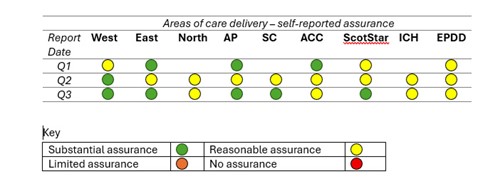
Quality Reporting – All areas provide self-assessment quarterly reports to the Care Quality and Professional Development Department. These are collated by the Lead Practitioner for Health and Care Staffing/Excellence and Care and, where necessary, further clarity sought to ensure assurances where appropriate. The quarterly reporting provides organisational level overview of each area and usefully shares innovations, mitigations and challenges alike to ensure organisation sharing and learning. Evidence exists of sharing learning, particularly around the West Regions adoption and testing North Regions’ delayed conveyance scheme which has the potential to positively impact on care and ultimately outcomes. The reports continue to use the ‘RAG’ system to provide assurances against each area of the Act – see below for reporting assurance Q1-Q3 2025/26. The table below identifies variability across areas on self-reported assurance, but by Q3 more green (Substantial Assurance) reported across areas.
Table 3: Areas of care delivery – self-reported assurance
Daily Splash Reports – The daily (and quarterly) SPLASH reports provide a critical mechanism for organisational awareness and surveillance, offering real time insight into resourcing levels across operational areas and supporting enhanced situational awareness. The report highlights specific data such as percentage staffing levels in each region, expected vs actual call numbers, hospital turn-around times and number of clinicians (and calls) currently being managed by the Integrated Clinical Hub. Collectively they capitalise on the data rich environment of the Scottish Ambulance Service.
Escalation and Risk-Mitigation Processes – Established escalation plans exist within SAS under the Generic Contingency Plan - Capacity Management Policy. The Resource Escalatory Action Plan (REAP) uses a 4 point scale from 1 to 4 (1 – Normal Service Delivery, 2 – Moderate Impact, 3 – Significant Impact and 4 – Critical Impact/Service Failure). These are reported in the quarterly SPLASH reports. As REAP levels increase, this activates a sequence of REAP mitigation Measures that may include redeployment of resources to safeguard the most critical and vulnerable patients. All areas actively monitor, manage and mitigate risk within established guidance and in collaboration with partner organisations with evidence of innovative approaches available through the quarterly reports. Where the service identifies risk associated forecast vs actual demand they have the option to offer out overtime to existing staff or to Bank Staff where appropriate. This helps ensure cost effective application of resource within the context of actual and projected demand. The Scottish Ambulance Service does not use agency staff.
Workforce Modelling and Local Context Monitoring – Using the Six Steps Methodology, workforce modelling is informed by population need (projected population need), geographical influences and local context across island, remote and rural and urban settings. Insights from local leadership teams support the monitoring and local surveillance of patients’ needs particularly those relating to specific conditions/presentations, alongside recruitment challenges, sickness absence cover and seek innovative ways to mitigate. Informed by recent evidence there are clear disparities in ethnicity related healthcare needs with White Scottish People more likely to develop cancer than ethnic minority groups, Pakistani men living in Scotland have a significantly higher risk of heart attack and of admission to hospital with asthma compared to Scottish White men. Such data helps inform how services are transformed to meet the patients needs.
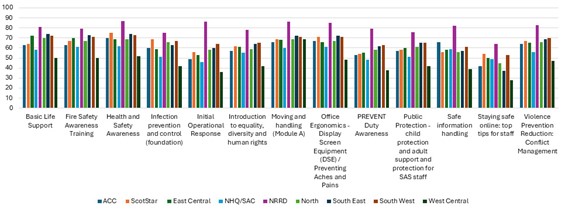
Education and Training – The Education and Professional Development Department continues to Provide Mandatory and Statutory Training and Education (annual updates), Ambulance Care Assistant Training, Return to Work (modular), Driving Training and support and Induction for Newly Qualified Paramedics. Online core Statutory and Mandatory learning has been fully transferred to TURAS and provides the ability to track staff member’s progress. Learning in Practice (LiP) extends over an 18-month period (April 2025 – September 2026). LiP attendance is tracked by EPDD and reported to various groups such as Clinical Governance Committee and Staff Governance Group (SCG) and National Partnership Forum (NPF). As of 18/03/2026 is reported as n=1173/4928 (24%). The cumulative uptake of LiP training is reported at 70.39% i.e spaces offered vs spaces filled by Regions. EPDD have revised the LiP plan going forward from April 2026 to accommodate delays in achieving completion of the cycle by September 2026. The new completion date for this cycle has now been moved to April 2027 based on a number of assumptions.
Bar Graph 1: Turas % Compliance - LiP Modules (April 2025 - February 2026)
Health and Wellbeing – Health and Wellbeing of Staff is central to the delivery of safe, high quality, patient centred care. In the recent strategy update, Project Status on Staff Wellbeing remains Amber. Staff wellbeing is monitored through a combination of day-to-day engagement, sickness absence data, rest break and shift finish monitoring, organisational surveys (Pulse Surveys, TRiM, and iMatter), and structured tools such as Wellbeing Action Plans, manager checklists, and Health Passports. Formal data sources, including attendance trends, OHS referrals, patient experience indicators, and incident or ER feedback, are reviewed alongside qualitative insights from 1:1s, team meetings, and station visits. Operational pressures such as prolonged handover delays and late finishes continue to affect fatigue, flexibility, and overtime uptake, with some services reporting improvements in AP wellbeing and reduced short-term absence. Additional mechanisms such as wellbeing groups, national forums, and the staff feedback app provide real time insight, while research partnerships (e.g., the hydration study with the University of Stirling) help inform future wellbeing initiatives.
Research and Innovation - The Scottish Ambulance Service have recently been involved in a number of key studies: CATNAPS, STALLED and Long Covid studies and currently/recently part of the KEEP study. STALLED (NIHR funded) focuses on what works to improve safety, patient experience, outcomes and costs related to delayed ambulance handovers at Emergency Departments. KEEP - is a mixed methods research project developing an evidence-based framework to improve retention of new ambulance staff by identifying-personal and organisational factors influencing early workforce attrition. The Scottish Ambulance Service is actively involved in national research studies that support safe and sustainable staffing. This includes NIHR funded‑ work on emergency department handover delays and workforce focused research examining staff fatigue and retention in ambulance services.
Quarterly self-assessment reports from across the organisation form the basis for monitoring compliance with our duties. This supports the identification of areas of strength and potential learning within the organisation. Governance groups within SAS provide assurance of meeting the clinical needs of patients. This information is analysed to inform quarterly reports to our Board. These structures provide opportunities for feedback to be expressed. The use of InPhase from March 2025 provides data on staffing risks with the opportunity to monitor clinical input into decisions, disagreements and reviews.
Areas of success, achievement, or learning
| Area of success/achievement /learning | Details | Further action |
|---|---|---|
| Organisation Wide | Across the quarter, the service demonstrated strong learning and adaptability in managing significant system‑wide pressures. The Act has supported improved awareness and encouraged appropriate measure development. | Continue to sustain this progress and refine measurement as systems and processes evolve. |
| Integrated Clinical Hub | The ICH test of‑ ‑concept phase confirms value in clinical triage. Escalation pathways are functioning effectively; cases that cannot be clinically managed within the ICH transition smoothly to ambulance dispatch and wider organisational support. | Highlights the need for a full demand and‑ capacity review as activity has gr‑own beyond original assumptions. |
| Managerial Roles | Cross‑regional oversight and escalation structures performed effectively, demonstrating the value of strong governance and real‑time monitoring. |
Areas of escalation, challenges, or risks
| Area of escalation / Challenge / Risk | Details | Further action |
|---|---|---|
| Unscheduled Care, Emergency Care | Widespread respiratory and flu pressures in December highlighted vulnerability to rapid staff abstraction, impacting cover across all regions. | The service IPC Leads have been liaising with Health Boards to identify opportunities for supporting staff with easier access to vaccinations. |
| Paramedics/Technicians | Handover delays reduced operational case exposure, highlighting the need for enhanced CPD, learning opportunities, and supervision to maintain clinical competence. | Initiatives across all regions are seeking novel and innovative ways to reduce ambulance turn-around times at Emergency Departments. Future initiatives will be informed by local Service Evaluation and Quality Improvement initiatives and the outcomes of research programmes as outline above. |
| Integrated Clinical Hub | The ICH test of concept phase confirms value in clinical triage. Escalation pathways are functioning effectively; cases that cannot be clinically managed within the ICH transition smoothly to ambulance dispatch and wider organisational support. | Data from ICH Leads highlights occasions where insufficient AP staffing resource to match patient’s needs. Future mitigation opportunity via demand and capacity review to identify resourcing requirements. |
| Remote and Rural workforce Challenges | Recruitment and retention challenges in remote, rural and island areas continue to limit workforce capacity. Current vacancies and skill mix gaps, including paramedic numbers not yet reaching the 60% target in some locations mean the Region is at times unable to provide the full range of required professional disciplines. | Rural and island services provided key learning on recruitment, retention, and skill mix challenges, supporting future workforce planning refinements |
Compliance Assurance Level: Reasonable Assurance
Duty 12IC: Duty to have real-time staffing assessment in place.
Duty Summary
(1) It is the duty of every Health Board and the Agency to put and keep in place arrangements for the real-time assessment of its compliance with the duty imposed by section 12IA.
(2) The arrangements under subsection (1) must, in particular, include—
(a) a procedure for the identification, by any member of staff, of any risks caused by staffing levels to—
(i) the health, wellbeing, and safety of patients,
(ii) the provision of safe and high-quality health care, or
(iii) in so far as it affects either of those matters, the wellbeing of staff,
(b) a procedure for the notification of any such risk to an individual with lead professional responsibility (whether clinical or non-clinical) in the area where the risk was identified,
(c) a procedure for the mitigation of any such risks, so far as possible, by such an individual, and a requirement for that individual to seek and have regard to appropriate clinical advice, as necessary, in carrying out such mitigation,
(d) raising awareness among staff about the procedures described in paragraphs (a) (b) and (c),
(e) encouraging and enabling staff to use the procedures described in paragraphs (a) and (b),
(f) training individuals with lead professional responsibility (whether clinical or non-clinical) for particular types of health care in how to implement the arrangements put in place under paragraphs (a) to (e), and
(g) ensuring that such individuals receive adequate time and resources to implement those arrangements.
Please provide information on the steps taken to comply with Duty 12IC.
12IC(1)It is the duty of every Health Board and the Agency to put and keep in place arrangements for the real-time assessment of its compliance with the duty imposed by section 12IA:The Scottish Ambulance Service complies with Section 12IC of the Health and Care Staffing Act through a structured set of realtime staffing assessment systems, governance processes, and operational reporting arrangements. Staffing levels, skill mix and emerging risks are continuously monitored using GRS, C3, Power BI dashboards, and InPhase, all of which provide live visibility of resource availability and gaps. Daily oversight is maintained through the National Strategic Operations Manager call, Regional and Subregional‑ operational calls, and 08:45 conference callsstaffing declarations, with frequency increasing during periods of system pressure. These forums support shared situational awareness, coordinated mitigation planning, escalation, and forecasting.Additional governance is delivered through Daily Operational Huddles, TwiceWeekly Tactical Huddles, Regional Management Teams, and PartnershipForums,‑ ensuring both operational and strategic scrutiny. Real‑time adjustments,including overtime authorisation and
redeployment, are signed off by Heads of Service, with continuous leadership involvement through shift based conference calls and live Teams channels. Collectively, these processes ensure that SAS maintains‑, monitors, and escalates staffing assessments in real time, fulfilling statutory requirements under Section 12IC.
All named professions have agreed processes in place that enable real time staffing assessment to identify risks to patient safety, quality and outcomes. Daily emails to managers detail staffing cover levels for the following 6 weeks and give early opportunity for mitigation and escalation reducing the frequency of real time interventions. Daily regional and national calls discuss staffing and demand. This is supplemented by 24/7 oversight by control centres and Strategic Operations Managers. The move from Datix to InPhase (Ideagen) in March 2025 gives more opportunities for staff to report staffing risks as the software is available on mobile phones and does not require the use of an intranet connected computer. The real time assessment systems differ depending on the staff group and location however in each case routes for escalation are established and embedded in practice.
(2) The arrangements under subsection (1) must, in particular, include:
12IC(2)(a) a procedure for the identification, by any member of staff, of any risks caused by staffing levels to— the health, wellbeing, and safety of patients, (ii) the provision of safe and high-quality health care, or (iii) in so far as it affects either of those matters, the wellbeing of staff: As noted above all staff can report staffing adverse events through our risk and patient safety system and this process is highlighted in our Turas Learning package. The reporting of the adverse event on InPhase (Ideagen) ensures Managers review the event to confirm decisions made, clinical input, disagreements and reviews. The whistleblowing pathway is also available for staff to raise any concerns should this be considered appropriate. There is now evidence of reporting on safe staffing using the InPhase system (as outlined in the Q3 report), however further staff engagement and adjustments to the reporting process are being considered to ensure more accurate and appropriate reporting and recording.
12IC(2)(b) a procedure for the notification of any such risk to an individual with lead professional responsibility (whether clinical or non-clinical) in the area where the risk was identified: The Service uses regional and national calls to take the place of hospital huddles. These calls identify real-time issues in staffing and give opportunity for senior clinical leaders to take mitigating actions, such as relocation of staff and authorising the immediate release of overtime opportunities to provide additional resources. Daily (quarterly splash reports) share the projected (and real time) staffing levels across the regions and subdivisions giving six weeks of data, an early warning of potential staffing issues and the opportunity to implement interventions. All staff have clear line management and are able to raise a risk in real-time. The escalation routes for these risks extend to those individuals with lead clinical responsibility.
12IC(2)(c) a procedure for the mitigation of any such risks, so far as possible, by such an individual, and a requirement for that individual to seek and have regard to appropriate clinical advice, as necessary, in carrying out such mitigation: Quarterly self-assessment returns have confirmed that escalation to the lead with professional responsibility is possible at all times. The integration with
12IC(1) It is the duty of every Health Board and the Agency to put and keep in place arrangements for the real-time assessment of its compliance with the duty imposed by section 12IA: The Scottish Ambulance Service complies with Section 12IC of the Health and Care Staffing Act through a structured set of realtime staffing assessment systems, governance processes, and operational reporting arrangements. Staffing levels, skill mix and emerging risks are continuously monitored using GRS, C3, Power BI dashboards, and InPhase, all of which provide live visibility of resource availability and gaps. Daily oversight is maintained through the National Strategic Operations Manager call, Regional and Subregional‑ operational calls, and 08:45 conference calls staffing declarations, with frequency increasing during periods of system pressure. These forums support shared situational awareness, coordinated mitigation planning, escalation, and forecasting. Additional governance is delivered through Daily Operational Huddles, Twice Weekly Tactical Huddles, Regional Management Teams, and Partnership Forums,‑ ensuring both operational and strategic scrutiny. Real‑time adjustments, including overtime authorisation and redeployment, are signed off by Heads of Service, with continuous leadership involvement through shift based conference calls and live Teams channels. Collectively, these processes ensure that SAS maintains‑, monitors, and escalates staffing assessments in real time, fulfilling statutory requirements under Section 12IC.
All named professions have agreed processes in place that enable real time staffing assessment to identify risks to patient safety, quality and outcomes. Daily emails to managers detail staffing cover levels for the following 6 weeks and give early opportunity for mitigation and escalation reducing the frequency of real time interventions. Daily regional and national calls discuss staffing and demand. This is supplemented by 24/7 oversight by control centres and Strategic Operations Managers. The move from Datix to InPhase (Ideagen) in March 2025 gives more opportunities for staff to report staffing risks as the software is available on mobile phones and does not require the use of an intranet connected computer. The real time assessment systems differ depending on the staff group and location however in each case routes for escalation are established and embedded in practice.
(2) The arrangements under subsection (1) must, in particular, include:
12IC(2)(a) a procedure for the identification, by any member of staff, of any risks caused by staffing levels to— the health, wellbeing, and safety of patients, (ii) the provision of safe and high-quality health care, or (iii) in so far as it affects either of those matters, the wellbeing of staff: As noted above all staff can report staffing adverse events through our risk and patient safety system and this process is highlighted in our Turas Learning package. The reporting of the adverse event on InPhase (Ideagen) ensures Managers review the event to confirm decisions made, clinical input, disagreements and reviews. The whistleblowing pathway is also available for staff to raise any concerns should this be considered appropriate. There is now evidence of reporting on safe staffing using the InPhase system (as outlined in the Q3 report), however further staff engagement and adjustments to the reporting process are being considered to ensure more accurate and appropriate reporting and recording.
12IC(2)(b) a procedure for the notification of any such risk to an individual with lead professional responsibility (whether clinical or non-clinical) in the area where the risk was identified: The Service uses regional and national calls to take the place of hospital huddles. These calls identify real-time issues in staffing and give opportunity for senior clinical leaders to take mitigating actions, such as relocation of staff and authorising the immediate release of overtime opportunities to provide additional resources. Daily (quarterly splash reports) share the projected (and real time) staffing levels across the regions and subdivisions giving six weeks of data, an early warning of potential staffing issues and the opportunity to implement interventions. All staff have clear line management and are able to raise a risk in real-time. The escalation routes for these risks extend to those individuals with lead clinical responsibility.
12IC(2)(c) a procedure for the mitigation of any such risks, so far as possible, by such an individual, and a requirement for that individual to seek and have regard to appropriate clinical advice, as necessary, in carrying out such mitigation: Quarterly self-assessment returns have confirmed that escalation to the lead with professional responsibility is possible at all times. The integration with InPhase provides a permanent solution for the confirmation of appropriate clinical input and gives opportunities to register a disagreement and request a review. We have a high level of assurance in this auditable process.
12IC(2)(d) raising awareness among staff about the procedures described in paragraphs (a) (b) and (c): The legislation is included in the staff induction package for all staff. The further inclusion of the duties and responsibilities of staff in the annual training scheduled for the 25/26 will continue to raise staff awareness. While the organisation initially assessed this approach as sufficient to meet the expectations of this sub duty, monitoring undertaken as part of this reporting cycle identified that module completion rates were below the anticipated numbers. Through this process, the underlying causes were examined, and targeted actions are now being implemented to improve awareness and ensure the intended levels of completion are achieved in line with the annual Learning in Practice education.
12IC(2)(e) encouraging and enabling staff to use the procedures described in paragraphs (a) and (b): Our systems are accessible to all staff (via station PC’s and personal issue Mobile Phones for many staff) and the training includes the completion of 2 domains of the informed section of the TURAS learning resources. We will be able to monitor completion of the domains through TURAS reports. SAS has worked with NES to make these resources more accessible to staff through adaptions of language away from nursing and midwifery to a lexicon more familiar to an ambulance service. This work is ongoing and SAS is working on a project with NHS Education Scotland to evaluate and redesign the TURAS resources to be fit for all staff groups covered by the legislation.
12IC(2)(f) training individuals with lead professional responsibility (whether clinical or non-clinical) for particular types of health care in how to implement the arrangements put in place under paragraphs (a) to (e): Whole organisation recorded Teams meetings as part of the Chief Executive's weekly updates have introduced the legislation to the organisation and outlined the approach and responsibilities held by staff, the Board and the Scottish Government. This is backed with our intranet pages which are a developing resource with a planned FAQ section. Both will be complimented by the TURAS resources.
12IC(2)(g) ensuring that such individuals receive adequate time and resources to implement those arrangements: Self-assessment through quarterly reporting has identified that staff with lead responsibility do not always have the time and resources to meet their legislative requirements. This includes responsibilities under chapter 12IH Duty to ensure adequate time given to clinical leaders. Further detail is included in that section of this report.
Please provide Information on your methods of monitoring compliance with Duty 12IC
Please see above
Areas of success, achievement, or learning
| Area of success / achievement / learning | Details | Further action |
|---|---|---|
| Organisational Level |
Improved staffing cover achieved through strengthened winter planning, enhanced forecasting, and daily scrutiny of operational demand versus resource.
Effective mitigation measures implemented, including doubling single crews, realigning scheduled care resources and optimising AP deployment. |
Winter learning reinforced the need for early planning, cross-system forecasting, and proactive resource configuration to stabilise cover during surges. Regular review processes andreal-time tools (GRS, Power BI,InPhase) proved essential,demonstrating the importance of maintaining robust digital monitoring and clear escalation pathways. |
| Recruitment |
Successful national recruitment campaign increased skill mix, roster resilience, and shift coverage, with positive impact particularly in remote and rural areas.
EMRS staffing improved significantly following targeted recruitment, with additional business cases progressing to address remaining specialist gaps. |
Ongoing recruitment challenges in certain localities highlight the need for continued targeted attraction strategies and workforce planning. |
| Integrated Clinical Hub and Ambulance Control Centre | Increased meeting cadence (twice weekly plus daily calls) ensured sustained visibility, rapid decision making, and improved situational awareness durin high pressure/demand periods. | More frequent and collaborative working across teams and leadership strengthened the consistency of staffing decisions and reinforced the value of structured, documented governance. |
Areas of escalation, challenges, or risks
| Area of escalation / Challenge / Risk | Details | Further action |
|---|---|---|
| Recruitment and retention difficulties |
Ongoing recruitment and retention difficulties in certain rural and remote areas continue to limit full skill‑mix compliance and create coverage gaps. Some specialist areas (e.g., paediatric retrieval) still face staffing constraints, requiring continued business‑case progression and long‑term workforce planning.
|
National and targeted recruitment campaigns (including attracting clinicians from England/Wales and encouraging NQPs into rural posts), proactive vacancy management with Business Support, and development of business cases for specialist teams (e.g., EMRS, paediatrics). |
| Short-term staffing capacity challenges |
|
Enhanced winter planning using lessons learned, forecasting tools (PPSG, workforce dashboards), increased meeting cadence in December, and daily monitoring to adapt resource configuration in real time. |
| NQP reliance | Reliance on NQP capacity as an interim mitigation highlights the need for ongoing development and support to ensure safe, competent deployment. | While relying on NQPs is helpful in the short term but not a complete long‑term solution, as some areas still face persistent recruitment challenges and require ongoing development, supervision, and progression to fully strengthen skill mix. |
Compliance Assurance Level: Reasonable Assurance
Duty 12ID: Duty to Have Risk Escalation Process in Place.
Duty Summary
- It is the duty of every Health Board and the Agency to put and keep in place arrangements for the escalation of any risk.
- identified during the real-time assessment of its staffing levels in accordance with arrangements put in place under section 12IC, and
(b)which it has not been possible to mitigate in accordance with the arrangements put in place under that section.
(2) The arrangements under subsection (1) of this duty must include:
- A procedure for the initial reporting of a risk as described in subsection (1), by an individual with lead professional responsibility (whether clinical or non-clinical) in the area where the risk was identified, to a more senior decision-maker,
- A requirement for any such decision-maker to seek and have regard to appropriate clinical advice, as necessary, in reaching a decision on the risk, including on how to mitigate it,
- A procedure for the onward reporting of the risk, as necessary, to a more senior decision-maker in turn, and a requirement for that decision-maker in turn to seek and have regard to appropriate clinical advice, as necessary, in reaching a decision on the risk, including on how to mitigate it,
- A requirement for the arrangements put in place under paragraph (c) to escalate further in order to reach a final decision on the risk, including in appropriate cases by the reporting of the risk to the members of the Health Board.
- A procedure for the notification of every decision made following the initial report, and the reasons for it, to:
(i)any individual who was involved in identifying the risk in accordance with the arrangements put in place under section 12IC(2)(a),
(ii)any individual who was involved in attempting to mitigate the risk in accordance with the arrangements put in place under section 12IC(2)(c),
(iii)any individual who was involved in reporting the risk in accordance with the arrangements put in place under paragraph (a), (c) or (d) of this subsection, and
(iv)any individual who gave clinical advice in accordance with the arrangements put in place under section 12IC(2)(c), or under paragraph (b), (c) or (d) of this subsection,
- A procedure for those individuals to record any disagreement with any decision made following the initial report,
- A procedure for those individuals to be able to request a review of the final decision on a risk (other than a final decision made by the members of the Health Board or the Agency) made in accordance with the arrangements put in place under section 12IC(2)(c) or, as the case may be, paragraphs (b), (c) or (d) of this subsection,
- Raising awareness among staff about the procedures described in paragraphs (a) to (f),
- Training individuals with lead professional responsibility (whether clinical or non-clinical) for particular types of healthcare, and other senior decision-makers, in how to implement the arrangements put in place under paragraphs (a) to (h), and
- Ensuring that such individuals receive adequate time and resources to implement those arrangements.
Please provide information on the steps taken to comply with Duty 12ID.
Across both the 2025 and 2026 reporting cycles, several consistent themes have emerged relating to the management and escalation of staffing risks. Escalation routes to senior decision makers remain strong and well embedded, with all regions reporting clear processes for ensuring leadership awareness of operational cover. Despite ongoing external operational pressures, the number of concerns submitted by SAS Clinicians on safe staffing have remained low across all areas. Ongoing work is determining efficacy of systems and processes and/or underutilisation of reporting mechanisms (for example In-Phase). InPhase, as the primary tool for recording safe staffing concerns from front line clinicians, continues to be embedded, supported by routine use of GRS data, daily cover dashboards and REAP escalation triggers to evidence operational oversight. However, some teams reported challenges in capturing or extracting accurate data, indicating a need for process refinement. In addition, ICH areas consistently highlighted the need for further work to fully align safe staffing processes with demand and capacity, marking this as a recurring area for improvement.
12ID(1a/b) identified during the real-time assessment of its staffing levels in accordance with arrangements put in place under section 12IC, and (b)which it has not been possible to mitigate in accordance with the arrangements put in place under that section: Governance structures remain consistently strong across regions, with staffing risks reliably escalated to senior decision makers. Leadership teams maintain full situational awareness through daily operational updates, ensuring clear accountability and well-defined responsibilities for safe-staffing oversight. Since the 2024/25 report the InPhase system has been implemented enabling staff easy access to an online tool to report and escalate any staffing related risks or concerns.
12ID(2)(a) A procedure for the initial reporting of a risk as described in subsection (1), by an individual with lead professional responsibility (whether clinical or non-clinical) in the area where the risk was identified, to a more senior decision-maker: The procedure for initial reporting of a risk is through InPhase, the central recording system for staffing concerns at local level. As was reported previously (2024/25), where risks cannot be accepted or mitigated locally, these are escalated through the leadership hierarchy and ultimately to the Executive Team. These processes are established via the Strategic Operations Manager who is guided by action cards and check lists. Although formal staffing concerns remain low, the improved system structure supports more consistent identification and escalation of risks. And, quarterly reports to the Lead Practitioner of Health and Care Staffing/Excellence within the Care Quality and Professional Development Directorate ensures organisational oversight and reporting.
12ID(2)(b) A requirement for any such decision-maker to seek and have regard to appropriate clinical advice, as necessary, in reaching a decision on the risk, including on how to mitigate it: The service’s established Clinical Governance framework includes systems, structures and processes with daily, weekly and monthly oversight structures, from the point of patient contact through to Board level, led by the Clinical Directorate. This Directorate comprises a multidisciplinary group with a broad range of experience, providing consistent expert scrutiny and assurance. Clinical advice is available at all times through the Clinical Directorate on-call system, providing a structured clinical safety net for clinical and non-clinical senior decision makers who are managing operational or staffing risks. This ensures
decisions are informed by appropriate clinical reasoning and are never made in isolation. Along-side senior clinical decision makers, frontline clinicians also have access to professional-to-professional support lines, enabling them to seek immediate senior clinical input when required. Additional real-time support is available through the Integrated Clinical Hub and/or Critical Care Desk This ensures patient needs and consideration of clinical risk are at the centre of operational and clinical decisions.
12ID(2)(c) A procedure for the onward reporting of the risk, as necessary, to a more senior decision-maker in turn, and a requirement for that decision-maker in turn to seek and have regard to appropriate clinical advice, as necessary, in reaching a decision on the risk, including on how to mitigate it: Daily (quarterly) cover reporting via Splash reports, GRS interrogation, intraday monitoring, and structured conference calls provide strong real‑time oversight. These tools help maintain a clear picture of staffing conditions, allowing teams to identify and manage risks promptly even when formal reports are minimal.
12ID(2)(d) A requirement for the arrangements put in place under paragraph (c) to escalate further in order to reach a final decision on the risk, including in appropriate cases by the reporting of the risk to the members of the Health Board:
As outlined above, robust systems and processes are in place to ensure that significant staffing concerns can be escalated rapidly to Board level when required. Business continuity plans support ongoing service delivery and align with both regional and national escalation frameworks, which are reviewed regularly as part of our risk and resilience arrangements. We also have specific escalation plans for issues such as delayed hospital turnarounds, developed collaboratively with the relevant Boards to ensure a shared understanding of the risks and coordinated actions to mitigate them. These escalation processes are well‑established, routinely tested, and we have a high level of confidence in their effectiveness.
12ID(2)(e) A procedure for the notification of every decision made following the initial report, and the reasons for it, to:
- any individual who was involved in identifying the risk in accordance with the arrangements put in place under section 12IC(2)(a),
- any individual who was involved in attempting to mitigate the risk in accordance with the arrangements put in place under section 12IC(2)(c),
- any individual who was involved in reporting the risk in accordance with the arrangements put in place under paragraph (a), (c) or (d) of this subsection, and
- any individual who gave clinical advice in accordance with the arrangements put in place under section 12IC(2)(c), or under paragraph (b), (c) or (d) of this subsection:
The introduction of InPhase from March 2025 brings together the Service’s risk reporting and escalation processes in alignment with the requirements of this section. Its functionality mirrors the National Real-Time Staffing Resource available to all Boards via TURAS, with the
added capability of generating automatic email notifications to support timely escalation. The transition to InPhase was supported by a targeted internal education campaign. Recent analysis of LiP and TURAS Module completion data, for the purposes of this annual report, has identified a low completion rate of the HCSA Modules (ca. 250). The Education Department has been notified of this matter and is actively identifying and implementing measures to mitigate the issue that will now be reported in our 2026/27 quarterly reporting. InPhase is accessible via service issued mobile phones and does not require connection to the intranet, improving usability for staff working remotely or away from base, particularly our clinicians. Previous annual report rated this aspect as yellow to allow sufficient time during 2025/26 for audit and evaluation to confirm whether the system’s functionality meets expected standards. It is likely that this period of education will now run into the next financial year 2026/27.
Decision makers consistently apply professional judgement supported by operational data. Regular leadership discussions ensure that staffing decisions account for current resources, clinical risk, and operational pressures, reinforcing safe and informed decision-making practices.
REAP escalation triggers are routinely applied and referenced as evidence of risk assessment and mitigation. Even when formal staffing concerns are not reported, REAP remains a consistent mechanism for structured, documented responses to operational pressures.
12ID(f) A procedure for those individuals to record any disagreement with any decision made following the initial report: Reviewing patterns, incidents and themes Risk registers remain stable with few formal staffing concerns recorded. Although overall incident patterns are limited, recurring themes, such as the need for improved process embedding in some areas, highlight opportunities for targeted improvement and ongoing monitoring. A key priority 2026/27 is to develop a formal process for reviewing such cases of disagreement. Emails from the InPhase system include a link for staff to register a disagreement via an MS form. Disagreements are recorded in a secure MS List and referenced to the InPhase incident number. Disagreements are then shared and monitored. Self-assessment quarterly reports will record numbers of disagreements received in each reporting area of SAS.
12ID(g) A procedure for those individuals to be able to request a review of the final decision on a risk (other than a final decision made by the members of the Health Board or the Agency) made in accordance with the arrangements put in place under section 12IC(2)(c) or, as the case may be, paragraphs (b), (c) or (d) of this subsection: Emails from the InPhase system include a link to request a review via a MS form. Reviews are recorded in a secure MS List and referenced to the InPhase incident number. Reviews will be undertaken by an organisation wide panel. This duty remains yellow until monitoring can confirm the process is effective and embedded in staff practice.
12ID(h) Raising awareness among staff about the procedures described in paragraphs (a) to (f): Staff engagement with safestaffing processes continues to develop, though variability remains in awareness of the Act and the impact this has on how confidently staff use reporting tools. Strengthening training, guidance and communication will support more consistent and effective participation and reporting pertaining to safestaffing responsibilities. Completion rates to-date for the two HCSA modules included in this year’s LiP programme were significantly lower than anticipated particularly when compared to other modules (circa n=205 vs n=3300). The content is split across two online TURAS pages, and it is likely that many staff were not fully aware of the HCSA components despite it being explicitly highlighted in invitation letters. Having been identified, colleagues in EPDD are taking steps to ensure awareness and visibility which we anticipate will lead to improved completion rates for the remainder of the LiP cycle. This being said, staff also have full access to the Health and Care Staffing Legislation resources on @SAS, which are accessed periodically and continue as a central resource supporting awareness.
12ID(i) Training individuals with lead professional responsibility (whether clinical or non-clinical) for particular types of healthcare, and other senior decision-makers, in how to implement the arrangements put in place under paragraphs (a) to (h): A significant number of colleagues (>100) involved in safe staffing management and the development of related procedures and policies have participated in internal training programmes on the Skills for Health’s Six Steps to Integrated Workforce Planning methodology across the past decade. Additional internal development approaches to develop workforce planning skills within regional leadership teams is currently being discussed with a view to delivery across 2026/27. The recently seconded Lead Practitioner for Health and Care Staffing/Excellence in Care is currently undertaking a further development course on the Six Steps methodology being run by Public Services Delivery Scotland (formerly NHS Education for Scotland) and is being supported in post through structured mentorship from the Associate Director of Care Quality and Professional Development. This ensures strong professional oversight and continued alignment with national safe staffing requirements. Operationally, Leaders demonstrate consistent use of staffing intelligence when making operational decisions, from reallocating resources to pausing non-critical activities. This ensures that safe staffing considerations are prioritised and incorporated into daily operational choices.
12ID(j) Ensuring that such individuals receive adequate time and resources to implement those arrangements: Overall progress has been maintained, with leadership teams taking appropriate action to sustain cover despite occasional pressure points. The integration of the SAS Safe Staffing Tool into InPhase represents a positive development, alongside the continued use of REAP actions to manage shortfalls. Some challenges remain, including data capture issues and the need for ICH to further embed safe staffing processes and align demand with capacity. Ensuring dedicated leadership time and resource remains essential to support these improvements and maintain consistent implementation across all regions.
Please provide Information on your methods of monitoring compliance with Duty 12IC
Please see above
Areas of success, achievement, or learning
| Area of success / achievement / learning | Details | Further action |
|---|---|---|
| National oversight of real time operational staffing | Effective operational oversight through real-time systems and REAP Processes | Continue to embed and refine these processes to ensure consistent and reliable application, while systematically capturing and spreading learning from strong pockets of practice across regions. |
| National Risk Escalation Processes and Governance | Across both reporting years 2024/25/2025/26, governance structures have remained consistently robust, with all regions reliably escalating staffing risks to senior decision makers. Leadership teams maintain full situational awareness through daily operational updates, structured oversight mechanisms, and clear accountability pathways. The implementation of InPhase since 2024/25 has further strengthened this, giving staff an accessible and standardised tool for reporting and escalating staffing risks. This demonstrates a well‑established culture of safe‑staffing governance and a developing organisational maturity in oversight arrangements. |
Areas of escalation, challenges, or risks
| Area of escalation / Challenge / Risk | Details | Further action |
|---|---|---|
| National Risk Escalation Processes and Governance | Staff engagement with safe staffing processes continues to develop; however, utilisation of InPhase for reporting staffing concerns remains comparatively low. This may be contributing to missed reporting opportunities among frontline
clinicians. Recent InPhase submissions, along with review by the Lead Practitioner for Health and Care Staffing/Excellence in Care, have identified‑ a small number of instances where staffing concerns had not been recorded. In addition, completion rates for the HCSA LiP modules are lower than anticipated (around 250 completions compared with approximately 3,300 for other modules on LiP). This further indicates a need for strengthened compliance monitoring and clearer linkage between education and the practical use of InPhase for reporting safe‑staffing issues. |
Strengthening visibility and accessibility within InPhase, alongside targeted communication and education on the relevant and practical use of InPhase for reporting safe‑staffing issues, would help promote more consistent and confident reporting across the workforce. |
Compliance Assurance Level: Reasonable Assurance
Duty 12IE: Duty to have arrangements to address severe and recurrent risks.
Duty Summary
Duty to have arrangements to address severe and recurrent risks.
(1) It is the duty of every Health Board and the Agency to put and keep in place arrangements to—
(a) collate information relating to every risk escalated to such level as the Health Board or the Agency (as the case may be) consider appropriate in accordance with the arrangements put in place under section 12ID (2), and
(b) identify and address those risks which are considered to be either or both—
(i) severe,
(ii) liable to materialise frequently.
(2) The arrangements under subsection (1) must, in particular, include a procedure for—
(a) the recording of a risk as described in subsection (1)(b),
(b) the reporting of any such risk, as necessary, to a more senior decision-maker, including in appropriate cases to the members of the Health Board or the Agency (as the case may be),
(c) the mitigation of the risk, so far as possible, and a requirement for appropriate clinical advice to be sought and had regard to in carrying out such mitigation, and
(d) the identification of actions to prevent the future materialisation of the risk, so far as possible.
Please provide information on the steps taken to comply with Duty 12IE.
Severe and recurrent staffing risks are identified through a structured combination of real time operational monitoring, formal governance processes, and regular regional oversight. Core systems include GRS, InPhase, daily operational reports, Power BI dashboards, SPLASH reports, absence management information, and intraday reporting, all of which highlight emerging gaps, recurrent issues, and pressure points as they arise. These tools are supplemented by daily calls, weekly staffing meetings, business support forecasting processes, and operational huddles, providing multiple dynamic contact points where risks can be raised, reviewed, and escalated.
- Duty to have arrangements to address severe and recurrent risks. (1) It is the duty of every Health Board and the Agency to put and keep in place arrangements to:
12IE(1)(a) collate information relating to every risk escalated to such level as the Health Board or the Agency (as the case may be) consider appropriate in accordance with the arrangements put in place under section 12ID (2): The service utilise the InPhase risk management system for the reporting and management of adverse events, feedback, whistleblowing and risks. This is where staff report concerns that have caused, or could have caused, harm to patients or staff. Adverse events are assessed using a Risk Matrix enabling their
categorisation for impact and likelihood resulting in an overall risk level. This aids decision making on actions taken to accept, mitigate or escalate the event at an individual level. The collation of this data enables the identification of themes and trends to identify the requirements for targeted intervention. Any actions taken by leads are recorded and the decision shared.
There are formal governance structures in place to ensure there is high level scrutiny of Regional and Operational Risk Registers. Each Region, Department and Area across the Service are responsible for maintaining a risk register. Each register is held on our InPhase Risk Management system and adverse event information, along with many other sources, can be used to inform the identification of risks. All risks are then graded using our Risk Management matrix with all Very High and High level risks presented for review on a cyclical basis at the Services monthly Performance and Planning Steering Group (PPSG). This is where where risks can be discussed and escalated to the Corporate Risk Register (CRR) if appropriate. The CRR is presented to every PPSG, Audit and Risk Committee and SAS Board meeting for review and assurance of the mitigating actions in place.
Subregional and regional teams also come together several times each week to discuss current risks (in some regions this occurs at regional and weekly at sub-regional level), while partnership forums offer additional structured opportunities for staff partners and management side concerns to be surfaced. REAP and NEP escalation frameworks provide a national context for assessing systemic pressure and trigger actions when escalation levels change.
Mitigating plans are monitored and updated regularly, with monthly reviews in InPhase supporting ongoing visibility of recurring patterns. In specific areas such as ICH, the model continues to be tested and refined, supported by active business case work to ensure appropriate alignment of clinical staffing to demand. Collectively, these systems provide a comprehensive approach for identifying, escalating, and managing severe or recurrent staffing risks across regions.
12IE(1)(b) (b) identify and address those risks which are considered to be either or both (i) severe, (ii) liable to materialise frequently: As with the previous annual report, reporting lines within the Risk and Resilience Department, alongside Director led portfolio oversight, ensure that reported and corporate risks are monitored routinely. Risks are clearly assigned to owners, and the system flags any that have not been updated or addressed within the required timeframes. Trend analysis is used to identify risks that are severe or frequently recurring, supporting timely escalation and proactive management.
(2) The arrangements under subsection (1) must, in particular, include a procedure for:
12IE(2)(a) (a) the recording of a risk as described in subsection (1)(b): The InPhase system is used to extract risks by categories such as Risk Title, and Severity. Individual service areas can view and filter the risks relevant to their own teams. Any risks that haven’t been updated or addressed are flagged and risk owners are contacted for updates. The system sits within our existing governance structure and feeds into the regular reporting that goes through our established governance committees and groups.
12IE(2)(b) the reporting of any such risk, as necessary, to a more senior decision-maker, including in appropriate cases to the members of the Health Board or the Agency (as the case may be): Risks are escalated through the management structure, with clear clinical and professional routes up to the Executive Team. Staffing risks are categorised within InPhase, and additional indicators, such as ‘missed meal breaks’ and ‘fatigue’, are also captured. This helps us identify risks linked to staff wellbeing and how these may impact safe staffing, giving us a useful triangulation point. Through these processes, frequent or severe risks are identified quickly, and we have a high level of confidence in the assurance this provides.
As previously noted, InPhase escalates adverse events through the clinical and professional lines. The system allows supporting notes to be attached to each risk, which means any clinical involvement can be clearly recorded. A check box has also been added to show whether clinical input was sought or provided. This gives us an auditable point for future assurance and acts as a helpful reminder of when clinical advice should be considered as part of staffing decisions.
12IE(2)(c) the mitigation of the risk, so far as possible, and a requirement for appropriate clinical advice to be sought and had regard to in carrying out such mitigation, and: When an InPhase event is closed, any actions identified are shared and stored in the system. These actions sit within the database and can be retrieved individually when required They will always cover, at a minimum, the immediate mitigation of the event. Longer term or preventative actions may need to go through the relevant governance groups, where they’re recorded within their action ‑logs.
12IE(2)(d) the identification of actions to prevent the future materialisation of the risk, so far as possible: the identification of actions to prevent the future materialisation of the risk, so far as possible. Monitoring of systems and processes for compliance operates across several interconnected strands. Quarterly self-assessment returns ask services to identify whether any severe or recurrent risks have arisen within the reporting period and to outline the actions taken in response. These findings inform the Health and Care Staffing quarterly reports submitted to the Board. In parallel, the InPhase system escalates risks directly to senior decision makers and clinical leaders, providing an additional source of intelligence. Taken together, this dual approach allows comparison between ‑self-reported‑ activity and system ‑generated data, offering a more robust and balanced picture of overall compliance.
Please provide Information on your methods of monitoring compliance with Duty 12IE
Please see above
Areas of success, achievement, or learning
| Area of success /achievement /learning | Details | Further action |
|---|---|---|
| InPhase: national reporting of concerns around Safe Staffing levels. | InPhase has been introduced as the online reporting tool for safe staffing related issues with some indication of its use. | Continue to review and improve reporting mechanisms via the InPhase online reporting system for trends. |
Areas of escalation, challenges, or risks
| Area of escalation / Challenge / Risk | Details | Further action |
|---|---|---|
| InPhase – national reporting of concerns around Safe Staffing levels. | InPhase has been introduced as the reporting tool for staffing related issues and we are beginning to see evidence of its use. However, reporting by front‑line clinicians remains infrequent, and anecdotal evidence suggests that some safe‑staffing concerns are being absorbed within reports of broader, more significant issues. As a result, the staffing element may be treated as secondary and not recorded as a distinct safe‑staffing concern.
|
To review the InPhase online reporting user interface to identify further actions to improve both accuracy and frequency of reporting. Consider adjustments within InPhase.
Closer scrutiny required and routine monitoring. |
| Advanced Practitioner Staffing |
We acknowledge that the ICH remains a test-of-concept model, and further refinement is needed to ensure we have the right number and mix of clinicians at every hour of the day. At present, we are using GPs to match demand as far as is feasible within the current financial envelope. An ICH business case is underway to support this work. AP staffing also remains an ongoing concern. |
Complete the ICH business case to define the optimal clinical staffing model, including required GP and AP capacity, and implement short-term‑ measures to stabilise AP staffing while the revised model is finalised. |
Duty 12IF: Duty to Seek Clinical Advice on Staffing.
Duty Summary
Duty to Seek Clinical Advice on Staffing.
(1) It is the duty of every Health Board and the Agency to put and keep in place arrangements for—
(a) seeking and having regard to appropriate clinical advice in making decisions and putting in place arrangements in relation to staffing under sections 12IA to 12IE and 12IH to 12IL,
(b) recording and explaining decisions which conflict with that advice.
(2) The arrangements under subsection (1) must, in particular, include—
(a) where a Health Board or the Agency (as the case may be) reaches a decision on a matter which conflicts with the clinical advice it has received—
(i) a procedure for the identification of any risks caused by that decision,
(ii) a procedure for the mitigation of any such risks, so far as possible,
(iii) a procedure for the notification of any such decision, and the reasons for it, to any individual who gave clinical advice on the matter,
(iv) a procedure for any such individual to record any disagreement with the decision made on the matter,
(b)a procedure for individuals with lead clinical professional responsibility for a particular type of health care to report to the members of the Health Board or the Agency (as the case may be), on at least a quarterly basis, about the extent to which that individual considers that it is complying with the duties imposed by—
(i) this section, and
(ii) sections 12IA to 12IE and 12IH to 12IL,
(c) a procedure for such individuals to—
(i) enable and encourage other employees to give views on the operation of this section, and
(ii) record such views in reports made in accordance with the arrangements put in place under paragraph (b),
(d) raising awareness among individuals with lead clinical professional responsibility for particular types of health care in how to implement the arrangements put in place under paragraphs (a) to (c), and
(e) ensuring that such individuals receive adequate time and resources to implement those arrangements.
(3) Every Health Board and the Agency must have regard to the reports received in accordance with the arrangements put in place under subsection (2)(b).
Please provide information on the steps taken to comply with Duty 12IF.
Clinical advice is consistently built into staffing decisions through daily leadership calls, clinically trained managers, and the involvement of senior clinicians including the Regional Clinical Quality Lead, Clinical Leads, APs, AMD, and National Clinical Advisors. Clinical leaders participate in operational and tactical huddles, provide real-time guidance, and ensure decisions are reviewed for clinical safety and recorded through established governance processes. A full clinical leadership structure is in place, ensuring rapid access to expert clinical input whenever required.
Detailed response:
- It is the duty of every Health Board and the Agency to put and keep in place arrangements for:
12IF(1)(a) seeking and having regard to appropriate clinical advice in making decisions and putting in place arrangements in relation to staffing under sections 12IA to 12IE and 12IH to 12IL: Clinical advice is integrated into staffing arrangements through established processes that ensure clinical input informs roster design, daily operational decisions, and the management of staffing risks. Rosters are built using demand, capacity data, and local contextual factors, with Workforce Planners applying Business Rules and escalating exceptions to managers for clinical input as required. Clinical oversight is maintained through daily leadership and operational calls, with involvement from senior clinicians, clinically trained managers, clinical on‑call, and the Regional Clinical Quality Lead, who also review risks and staffing gaps through Tactical Huddles. Additional expertise from Clinical Leads, Advanced Practitioners, Clinical Service Managers, the Associate Medical Director, and the National Clinical Quality Lead for ACC is accessed when needed. All decisions, including those that diverge from clinical advice, are documented in systems such as InPhase, GRS, huddle logs, business cases, and escalation records, capturing clinical input, identified risks, decision rationale, and mitigation actions. Ongoing education supports staff to record risks appropriately, ensuring a transparent audit trail that meets regulatory expectations for safe and informed staffing decisions.
12IF(1)(b) recording and explaining decisions which conflict with that advice: Decisions that conflict with clinical advice are recorded and explained through established governance systems, including InPhase and GRS records, PPSG papers, and supporting modelling and performance data. Daily Operational and Tactical Huddle logs provide real-time documentation of clinical advice, decisions taken, escalation actions, and the rationale for any deviation. Additional evidence, such as the Resource Planning Overtime Database, meeting notes, business cases, complaints or grievance records, and InPhase, offers further transparency on why alternative decisions were made.
(2)(a) Health Board or the Agency (as the case may be) reaches a decision on a matter which conflicts with the clinical advice it has received:
12IF(2)(a)(i) a procedure for the identification of any risks caused by that decision: Risk profiles in ambulance services change rapidly, so clinical input is central to assessing risk linked to resource location, capacity, and staffing. Real‑time risks arising from decisions that diverge from clinical advice are identified through Operational and Tactical Huddles and continuous monitoring systems such as GRS,
InPhase, performance dashboards, and forecast‑modelling data. These processes document clinical recommendations, highlight any divergence, and assess impacts on patient safety, service delivery, and staff deployment. Ambulance queuing at hospitals is also monitored, as prolonged handover delays can heighten risk by reducing available frontline resources. Risks and mitigation actions are recorded in InPhase, while PPSG papers, feedback / complaints data, and retrospective reviews of demand and resource location provide further audit evidence. Where organisational decisions conflict with clinical advice, the rationale and actions taken to reduce risk are transparently recorded for governance and review.
12IF(2)(a)(ii) a procedure for the mitigation of any such risks, so far as possible: Mitigation actions are agreed and recorded within the same operational structures: Operational and Tactical Huddles, escalation tables, and InPhase entries. Clinical leaders, including the Regional Clinical Quality Lead, Clinical Leads, APs, and the Associate Medical Director, support the identification of safe skill mix‑ adjustments, redeployment options, overtime or shift cover solutions, and escalation through REAP/NEP levels where required. The Resource Planning Overtime Database evidence‑ mitigation decisions such as prioritising clinically essential shifts and adjusting staffing allocations to minimise risk.
12IF(2)(a)(iii) a procedure for the notification of any such decision, and the reasons for it, to any individual who gave clinical advice on the matter: Notification occurs through established communication channels including daily conference calls, Tactical Huddles, email summaries, huddle logs, and meeting notes. Clinicians providing advice—whether from the Regional Clinical Quality Lead, Clinical Directorate, Integrated Clinical Hub, or Clinical Leads—are informed of the decision, the rationale for differing from clinical advice, and any associated mitigation actions. Documentation in InPhase, GRS, PPSG papers, and huddle records provides a transparent record of what was communicated and why.
12IF(2)(a)(iv) a procedure for any such individual to record any disagreement with the decision made on the matter:
Any clinician whose advice is not followed can record disagreement formally through several mechanisms:
- entries in Tactical or Operational Huddle logs,
- InPhase adverse event submissions,
- email correspondence or meeting notes,
- PPSG papers or escalation records documenting dissent.
These systems create a clear audit trail showing where clinical advice differed from the final decision and allow the clinician’s position to be formally captured for governance, review, and learning.
2(b) a procedure for individuals with lead clinical professional responsibility for a particular type of health care to report to the members of the Health Board or the Agency (as the case may be), on at least a quarterly basis, about the extent to which that individual considers that it is complying with the duties imposed by:
12IF(2)(b)(i/ii) this section; and 12IA to 12IE and 12IH to 12IL: As was reported last year the individuals with lead clinical responsibility continues as the Director of Care Quality and Professional Development and the Medical Director. Quarterly reports from the organisation are gathered and collated by the Lead Practitioner for Health and Care Staffing/Excellence in Care and Associate Director for Care Quality and Professional Development to form a report for the lead individuals to report to the Board. This report continues to be refined and improved in response to our developing systems and processes. Our risk management system also collates risk reports which feed into our Clinical Governance Framework. Further work is developing within the context of Excellence in Care and care quality measures that, once completed, will further support triangulation of data and inform staffing and clinical care quality.
2(c) a procedure for such individuals to:
- enable and encourage other employees to give views on the operation of this section, and
- record such views in reports made in accordance with the arrangements put in place under paragraph (b):
As reported in the previous financial year 2024/25, the opportunity to record decision making is part of InPhase. However further work needs to be undertaken to gather the views on the operation of this section of the duty. The Lead Practitioner Post was not filled for over half of the year 2025/26 and so further work is still required in this area but will be linked to the educational elements noted in section 12ID(2)(e) to improve visibility, understanding and completion thus ensuring a all employees have a ‘voice’.
3(d) raising awareness among individuals with lead clinical professional responsibility for particular types of health care in how to implement the arrangements put in place under paragraphs (a) to (c): Within the Scottish Ambulance Service, lead clinical responsibility rests with the Director of Care Quality and Professional Development and the Medical Director. Quarterly organisational reports are collated to provide these individuals with a comprehensive overview for reporting to the Board, and this process has proved effective in highlighting occasions where clinical advice has differed from staffing decisions. The organisational risk management system also records staffing related risks submitted by staff across the service, and these feed into the Clinical Governance Framework, ensuring that any divergence from clinical advice is logged, monitored, and subject to review. Although the reporting and risk management systems are not directly integrated, they reference one another to provide aligned, transparent oversight of clinical risk in relation to staffing decisions.
3(e) ensuring that such individuals receive adequate time and resources to implement those arrangements: The organisation can monitor the time allocated to individuals with clinical responsibilities; however, quarterly self-assessment returns consistently indicate that protected time is not always sufficient to meet these duties. Evidence from earlier sections demonstrates that clinical leaders are actively involved in daily operational and Tactical Huddles, roster design, escalation processes, and review of staffing decisions, all of which require dedicated time. Additional evidence captured through InPhase, GRS, PPSG papers, and quarterly organisational reporting further shows that clinical input is routinely sought and recorded, but capacity constraints can limit the ability of clinical leaders to fully engage in these processes. Further detail on these pressures, including their impact and required improvements, will be provided under Chapter 12IH.
Please provide Information on your methods of monitoring compliance with Duty 12IF
Please see above
Areas of success, achievement, or learning
| Area of success /achievement /learning | Details | Further action |
|---|---|---|
| National Clinical Oversight | Senior clinical figures, including the Regional Clinical Quality Lead, Clinical Leads, APs, AMD and national advisors, provide real‑time scrutiny and oversight. | Maximise the use of InPhase reporting to support proactive identification of trends and targeted quality improvement work. |
| Board Level Assurances |
Quarterly reporting structures, led by the Director of Care Quality and Professional Development and the Medical Director, supporting Board‑level assurance on compliance with statutory duties. | Continue refinement of quarterly reports and further enhance triangulation between clinical advice, staffing decisions, and risk data. |
Areas of escalation, challenges, or risks
| Area of escalation / Challenge / Risk | Details | Further action |
|---|---|---|
| Insufficient Protected Time for Clinical Leaders to Fully Discharge Duties | Quarterly self‑assessment returns show that protected time is not always sufficient for individuals with lead clinical professional responsibilities to undertake required duties.
|
|
Compliance Assurance Level: Reasonable Assurance
Duty 12IH: Duty to ensure adequate time given to clinical leaders.
Duty Summary
In complying with the duty imposed by section 12IA, every Health Board and the Agency must ensure that all individuals with lead clinical professional responsibility for a team of staff receive sufficient time and resources to discharge that responsibility and their other professional duties, including, in particular, time—
(a) to supervise the meeting of the clinical needs of the patients in their care,
(b) to manage, and support the development of, the staff for whom they are responsible, and
(c) to lead the delivery of safe, high-quality, and person-centred health care.
Please provide information on the steps taken to comply with Duty 12IH.
Summary:
Across the Service, clinical leadership is delivered through a broad range of roles including Paramedics, Advanced Practitioners, Integrated Clinical Hub clinicians and Clinical Team Leaders, with established systems in place to provide protected leadership and development time. Team Leaders receive allocated nonclinical time, APs participate in structured supervision, and AP/ScotSTAR staff benefit from protected development time; however, operational pressures, including hospital handover delays and remote working arrangements, continue to limit consistent access to this time. Regions are strengthening leadership capacity through measures such as increasing ASM clinical leadership posts and coordinating DFLM time through Resource Planning, while also trialling new approaches to improve TURAS appraisal completion in the context of rising staff numbers and limited leadership capacity. Evidence of progress is demonstrated through TURAS data, appraisal records, and GRS scheduling information, with ongoing work to ensure clinical leaders have the time and resources required to meet statutory duties and maintain high quality clinical oversight.
In complying with the duty imposed by section 12IA, every Health Board and the Agency must ensure that all individuals with lead clinical professional responsibility for a team of staff receive sufficient time and resources to discharge that responsibility and their other professional duties, including, in particular, time:
-
- to manage, and support the development of, the staff for whom they are responsible: Clinical leaders use their rostered leadership time to support supervision, professional conversations and development activities, but operational constraints—particularly the remote nature of ambulance work and increased staffing numbers—continue to restrict opportunities for face-to-face engagement. TURAS appraisal completion remains challenging, with reported rates ranging from 5% to 27% completed and 25–50% in progress across regions, reflecting varied local pressures and a lack of corresponding increases in leadership capacity. Many staff also complete appraisals on paper or, for medical staff, through healthboard systems, meaning recorded rates may underrepresent activity. Regions are trialling improvement measures such as self-booked appraisal slots and better rostering of protected time. Healthcare Improvement Scotland has identified appraisal completion as an area requiring further scoping. These efforts, combined with enhanced supervision mechanisms and leadership toolkits, support compliance with section 12IA(b).
- (as evidenced in quarterly reports), but any redeployment of clinical leaders is risk assessed and documented. These systems ensure that clinical leaders retain the capacity to supervise patient care as required by section 12IA(a). to supervise the meeting of the clinical needs of the patients in their care: The organisation provides protected leadership time to enable effective clinical oversight, including DFLM allocations for Clinical Team Leaders, PA/SPA time for clinical leads, and 25% protected nonclinical time for Advanced Practitioners. Larger stations maintain onsite leadership, while rural locations enable leaders to step back from operational duties when required. Advanced Practice and ScotSTAR staff also benefit from structured development time, and Integrated Clinical Hub clinicians provide clinical support in ACC environments. These allocations are tracked through the eRostering system. Operational pressures, most notably hospital handover delays and remote working patterns, can limit protected time
- to manage, and support the development of, the staff for whom they are responsible: Clinical leaders use their rostered leadership time to support supervision, professional conversations and development activities, but operational constraints—particularly the remote nature of ambulance work and increased staffing numbers—continue to restrict opportunities for face-to-face engagement. TURAS appraisal completion remains challenging, with reported rates ranging from 5% to 27% completed and 25–50% in progress across regions, reflecting varied local pressures and a lack of corresponding increases in leadership capacity. Many staff also complete appraisals on paper or, for medical staff, through healthboard systems, meaning recorded rates may underrepresent activity. Regions are trialling improvement measures such as self-booked appraisal slots and better rostering of protected time. Healthcare Improvement Scotland has identified appraisal completion as an area requiring further scoping. These efforts, combined with enhanced supervision mechanisms and leadership toolkits, support compliance with section 12IA(b).
Please provide Information on your methods of monitoring compliance with Duty 12IH
Please see above
Areas of success, achievement, or learning
| Area of success /achievement /learning | Details | Further action |
|---|---|---|
| Protected Leadership Time | Protected leadership time is routinely built into rosters (DFLM allocations, PA/SPA time, 25%non‑clinical time for APs, ScotSTAR development time).
The organisation deploys protected leadership time flexibly depending on station size and context, with larger stations offering continuous leadership presence and rural areas enabling clinical leaders to step away from operational duties. |
Continue strengthening leadership capacity in line with operational workforce increases.
Support consistent application of protected leadership time, particularly in areas with high operational demand. Continue development of toolkits, checklists and supervision frameworks to standardise leadership practice across regions |
Areas of escalation, challenges, or risks
| Area of escalation / Challenge / Risk | Details | Further action |
|---|---|---|
| TURAS Completion | TURAS appraisal completion remains significantly below desired levels in several regions (some reports as low as 5% completed, with 25–50% in progress).
|
Continue identifying and protecting time in duty rosters for staff to complete appraisals, led by CTLs and ASMs working with Resource Planning. Maintain and expand the ongoing ‑rostering work to increase consistency in appraisal opportunities. |
| Protected Leadership Time |
Protected leadership time is frequently disrupted by hospital handover delays, shift overruns and system pressures. Some teams, especially in Scheduled Care, do not have clinical support structures, limiting compliance with certain leadership duties. Uncertainty persists around protected learning time linked to the reduced working week, complicating future workforce planning. |
Increase leadership capacity proportionally as operational staffing grows, particularly where new roles or part-time patterns expand demand.
Reduce the impact of operational disruption on leadership time through improved roster design, contingency planning and escalation protocols.
|
Compliance Assurance Level: Reasonable Assurance
Duty 12II: Duty to ensure appropriate staffing: training of staff.
Duty Summary
In complying with the duty imposed by section 12IA, every Health Board and the Agency must ensure that its employees receive—
(a) such training as it considers appropriate and relevant for the purposes set out in section 12IA(1)(a) and (b), and
(b) such time and resources as it considers adequate to undertake such training.
Please provide information on the steps taken to comply with Duty 12II.
Summary
The organisation maintains staff competence through a national programme of Learning in Practice, statutory and mandatory elearning monitored weekly, robust recruitment checks to ensure qualifications are valid, and tailored induction programmes. NQP and Technician programmes support transition to autonomous practice with evidence of competency, alongside comprehensive return to work training. Competence is further supported through managing capability and performance where it is suboptimal, monitoring complaints, feedback and SAERs to ensure learning, and quality of care reviews led by the Clinical Quality Lead. A rolling programme of leadership training is delivered regionally, informed by ER case feedback and delivered jointly with staff partners. For Advanced Practitioners, university credentialling, competency frameworks and ongoing supervision apply. Across the organisation, systems such as TURAS Learning and Appraisal Reports, LiP completion reporting, initial training and preemployment checklists, professional registration checks, and statutory and mandatory training frameworks ensure staff remain qualified and competent. Ongoing support is provided through supervision, mentoring, 1-1s, continuous audit, refresher training, CPD time, reflective learning, and capability processes. Role specific training, developing competency frameworks, and structured clinical governance mechanisms (including SAER, JOSIC, IRAC, and Section 19 driving compliance) further maintain standards, ensuring all staff are supported to deliver safe, high-quality care.
In complying with the duty imposed by section 12IA, every Health Board and the Agency must ensure that its employees receive:
held for all staff. Employees in Ambulance Control Centres undergo regular competency audits with support provided as required. In addition, SAS employs a broad range of regulated healthcare professionals, including nurses, midwives, doctors, physiotherapists, and pharmacists, working across clinical and managerial roles. These individuals are aligned to their respective professional codes of practice, including NMC, GMC and HCPC, ensuring ongoing compliance with professional standards. Together, these arrangements ensure that employees receive the training (and undertake CPD) considered appropriate and relevant for meeting the requirements of Section 12IA(1)(a) and (b). such training as it considers appropriate and relevant for the purposes set out in section 12IA(1)(a) and (b): For new employees joining SAS, the Health and Care Staffing Act is included in the induction package, ensuring early awareness of statutory duties. For existing staff, the legislation is included in the annual cycle of training for clinical staff planned for 25/26, supported by an intranet page and resources on TURAS. SAS has collaborated with NHS Education Scotland to adapt TURAS resources to make them more accessible for ambulance service staff, and appraisals and Personal Development Plans (PDPs) are completed on TURAS with completion rates monitored. The organisation provides educational support through annual training updates delivered by the Education and Professional Development Department, alongside support for staff returning to work after a period of absence. Training records are
Please provide Information on your methods of monitoring compliance with Duty 12II
Please see above
Areas of success, achievement, or learning
| Area of success /achievement /learning | Details | Further action |
|---|---|---|
| LIP Topic Areas | Whilst this past year’s LiP activity has been primarily focused on Moving and Handling and the Reduction in Violence and Aggression, development has continued in parallel to expand more clinically focused education. The Education and Professional Development Department is actively progressing this work, with a clear commitment to enhancing clinically oriented learning that supports the ongoing delivery of high quality, safe and effective care by ambulance clinicians. | The organisation will continue to develop clinical education that is explicitly informed by both patient needs and clinicians’ identified learning requirements, drawing on the full range of reporting mechanisms within SAS. This includes ongoing analysis of feedback, clinical governance outputs, and educational evaluations to ensure that learning provision remains evidence based, responsive to emerging practice issues, and aligned with the requirements of high-quality, person-centred care. |
| National Research on return to work |
A cross-sectional questionnaire-based study, undertaken in collaboration with the Royal College of Paramedics and University partners at Stirling and Glasgow, is being used to examine ambulance clinicians’ experiences, preferences and educational needs when returning to work after a period of absence. This approach provides systematic insight into learner requirements and enables the generation of an evidence base that will inform ongoing development of educational support within SAS. | Continue supporting the study implementation |
Areas of escalation, challenges, or risks
| Area of escalation / Challenge / Risk | Details | Further action |
|---|---|---|
| Training Time for operational Staff and protected learning for all. |
Operational pressures, including staff shortages and shift demand, affect the consistency of protected learning time. Although protected LiP time is planned, final release is dependent on operational management, creating variability in access. Some teams are awaiting course dates or time off road, and the frequency and duration of protected time varies based on demand.
|
Improve reliability of protected time release where possible within operational constraints. Progress scheduling of LiP courses and access to eLearning time off road. Monitor staffing pressures that affect the availability of protected learning time. |
Compliance Assurance level: Reasonable Assurance
Duty to follow the common staffing method.
Duty Summary
(1)In relation to health care of a type mentioned in section 12IK, a Health Board or the Agency (as the case may be) must, no less often than at the frequency specified in regulations by the Scottish Ministers, use the common staffing method set out in subsection (2).
(2) The common staffing method means that a Health Board or the Agency (as the case may be)—
(a) uses the staffing level tool and the professional judgement tool as prescribed in regulations under subsection (3) and takes into account the results from those tools,
(b) takes into account, in so far as relevant, any measures for monitoring and improving the quality of health care which are published as standards and outcomes under section 10H (1) by the Scottish Ministers (including any measures developed as part of a national care assurance framework),
(c) takes into account—
(i) its current staffing levels and any vacancies,
(ii) the different skills and levels of experience of its employees,
(iii) the role and professional duties, in particular, of any individual with lead clinical professional responsibility for the particular type of health care,
(iv) the effect that decisions about staffing and the use of resources taken for the particular type of health care may have on the provision of other types of health care including, in particular, those to which this section does not apply,
(v) the local context in which it provides health care,
(vi) patient needs,
(vii) appropriate clinical advice,
(viii) any assessment by HIS, and any relevant assessment by any other person, of the quality of health care which it provides,
(ix) experience gained from using the real-time assessment arrangements under section 12IC (1) and the risk escalation processes under sections 12ID and 12IE,
(x) comments by patients, and by individuals who have a personal interest in their health care (for example family members and carers within the meaning of section 1 of the Carers (Scotland) Act 2016), which relate to the duty imposed by section 12IA, and
(xi) comments by its employees which relate to the duty imposed by section 12IA,
(d) identifies and takes all reasonable steps to mitigate any risks, and
(e) having followed the steps described in paragraphs (a) to (d), decides what changes (if any) are needed as a result to its staffing establishment, and to the way in which it provides health care.
Please provide information on the steps taken to comply with Duty 12IJ.
The Scottish Ambulance Service does not use the Common Staffing Method and this section does not therefore apply.
Within the Health and Care (Staffing) (Scotland) Act 2019 the Scottish Ambulance Service, under section 12IJ:
“In the case of the Scottish Ambulance Service, the requirements to use the common staffing methods under section 12IJ does not apply, since no existing staffing level tools are relevant to the health care which they provide, and so the duties in relation to reporting and following guidance under sections 12IM and 12IN are more limited”.
Explanatory Notes to Health and Care (Staffing) (Scotland) Act 2019, Accessed 1st June 2026
Link to the legislation explanatory notes here: Explanatory Notes to Health and Care (Staffing) Scotland) Act 2019
Please provide Information on your methods of monitoring compliance with Duty 12IJ
Please see above
Duty 12IL: Training and consultation of staff
Duty Summary
In complying with the duty imposed by section 12IJ, every Health Board and the Agency must—
(a) encourage and support its employees to give views on its staffing arrangements for the types of health care described in section 12IK,
(b) take into account and use any such views it receives to identify best practice, and areas for improvement, in relation to such staffing arrangements,
(c) train employees (including, in particular, employees of a type mentioned in the third column of the table in section 12IK (1)) using the common staffing method on how to use it
(d) ensure that those employees receive adequate time to use the common staffing method, and
(e) provide information to employees engaged in the types of health care described in section 12IK about its use of the common staffing method, including about—
(i) the results from using the staffing level tool and the professional judgement tool under paragraph (a) of section 12IJ (2),
(ii) the steps taken under paragraphs (b), (c) and (d)] of that subsection, and
(iii)the results of its decision under paragraph (e) of that subsection.
Please provide information on the steps taken to comply with Duty 12IL.
Please see above
Please provide Information on your methods of monitoring compliance with Duty 12IL
This should include details of the local arrangements in place to monitor compliance with the duty, including mechanisms for escalating and addressing areas of non-compliance.
The Scottish Ambulance Service does not apply the common staffing method but applies the same principles and ethos to ensure legislative compliance.
(a) encourage and support its employees to give views on its staffing arrangements for the types of health care described in section 12IK: Over the past two years of reporting, the Scottish Ambulance Service has engaged extensively with its staff across multiple clinical groups. We continue to support our newest clinicians, our Newly Qualified Paramedics (NQPs), as they begin their careers in paramedicine. This includes a comprehensive six‑week induction programme, featuring a full range of orientation sessions covering policy, practice, guidelines, and key legislative requirements. As part of this, modules on the Health and Care Staffing (Scotland) Act 2019 are delivered to ensure early understanding of statutory duties.
During the coming year, work will continue to expand access to/awareness off these modules so that all clinical groups included within the Act receive consistent and timely education. This will include Ambulance Care Assistants, Call Takers, Integrated Clinical Hub Clinicians, Ambulance Technicians, ACC Dispatchers, and Scheduled Care Co‑ordinators. While the anticipated engagement through LiP has been impacted for the reasons outlined earlier, EPDD has planned mitigation strategies to progress this work. Further examination of the InPhase reporting mechanism will also take place, with a focus on improving staff understanding of reporting processes and system use at the point of completion. At a more strategic level, the newly appointed (seconded) Lead Practitioner for Health and Care Staffing / Excellence in Care is in the early stages of engagement with relevant strategic planning groups and with leads responsible for reporting. This engagement will continue as an ongoing priority to strengthen alignment, visibility, and understanding of all duties under the Act.
(b) take into account and use any such views it receives to identify best practice, and areas for improvement, in relation to such staffing arrangements: Ongoing surveillance of InPhase reports relating to all elements associated with the Health and Care Staffing Act (HCSA) will continue throughout the year. Regular review cycles will be established to ensure that any emerging themes, patterns, or outliers across all areas of care delivery are identified promptly and analysed in depth. This analysis will support early detection of risks, areas of good practice, and opportunities for service improvement. Over the coming year, a strengthened process will be developed to enable more robust and systematic review of concerns raised through InPhase and other reporting mechanisms. This will include a consistent methodology for assessing concerns, clearer categorisation of issues, and improved mechanisms for providing feedback to the individuals or teams who raised them. Where mitigations or improvements are identified, these will be documented, monitored, and evaluated to ensure that actions taken are effective and aligned with statutory duties and organisational priorities. This enhanced approach will support a more transparent, responsive, and learning‑focused culture, ensuring that staff concerns are acted upon, that outcomes are fed back, and that improvements are embedded across the organisation. Scheduled care co-ordinators
(c) train employees (including, in particular, employees of a type mentioned in the third column of the table in section 12IK (1)) using the common staffing method on how to use it: The Scottish Ambulance Service does not use the common staffing method or operate in the clinical locations stated in the columns under 12IK(1). However, staff have undertaken workforce planning training using Skills for Health 6 Steps to Integrated Workforce Planning methodology and there is the intention to review skills requirements in this area with regional leadership teams during 2026/27 and delivery further training as required. The seconded Lead Practitioner for Health and Care Staffin/Excellence in care is currently undertaking this course. All clinicians, including those in clinical leadership positions, will be required to complete the online TURAS modules on the HCSA.
(d) ensure that those employees receive adequate time to use the common staffing method: Although the Scottish Ambulance Service does not use the Common Staffing Method, it applies the principles and ethos of the method within the ambulance context.
- e) provide information to employees engaged in the types of health care described in section 12IK about its use of the common staffing method, including about—
(i) the results from using the staffing level tool and the professional judgement tool under paragraph (a) of section 12IJ (2),
(ii) the steps taken under paragraphs (b), (c) and (d)] of that subsection, and
(iii)the results of its decision under paragraph (e) of that subsection.
Clinicians in the Scottish Ambulance Service do not use the professional judgement tool and are not engaged in the clinical areas outlined in the legislation.
Compliance Assurance level: Reasonable Assurance
Planning and Securing Services
Duty Summary
Guiding principles etc. in health care staffing and planning
- In carrying out the duty relating to staffing imposed by section 12IA of the National Health Service (Scotland) Act 1978, every Health Board and the Common Services Agency for the Scottish Health Service must have regard to the guiding principles for health and care staffing.
(2) In planning or securing the provision of health care from another person under a contract, agreement or arrangements made under or by virtue of the National Health Service (Scotland) Act 1978, every Health Board and the Common Services Agency for the Scottish Health Service must have regard to—
(a)the guiding principles for health and care staffing, and
(b)the need for the person from whom the provision of health care is to be secured to have appropriate staffing arrangements in place.
Please provide information on the steps taken to comply with section 2(2) of this Duty.
This duty does not apply retrospectively but to new, or renewed, agreements. These will include for example SLAs with other boards and healthcare services secured from private providers.
Further work has identified a partnership with the Scottish Charity Air Ambulance and Service Level Agreements with Greater Glasgow and Clyde Health Board pharmacy for drug bags for the Emergency medical Retrieval Service; the Scottish National Blood Transfusion Service for blood products and the movement of blood products by air ambulance. These fall under the legislation and future SLAs will need to include regard to the Health and Care Staffing Act.
SAS procurement has planned to include in future documentation arrangements to ensure regard is given to the guiding principles and appropriate staffing arrangements as part of any tendering process. This will include any tendering arrangements for healthcare services at external events, such as the Commonwealth Games for example.
The rag status for this duty is green, substantial assurance.
Please provide Information on your methods of monitoring compliance when planning and securing services
Please see above
Compliance Assurance Level: Substantial Assurance